
Colonel Jack Jacobs on Global Conflict and the Middle Market
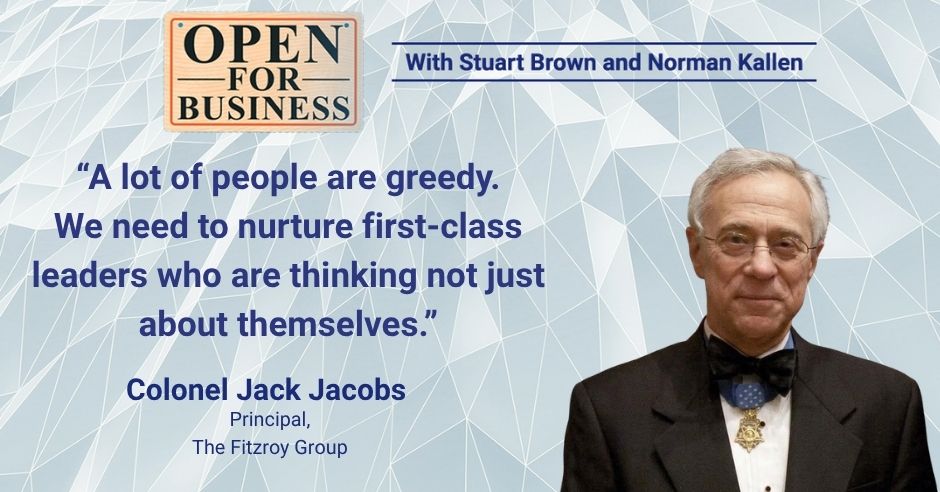
In this return appearance on the Open For Business podcast, Stuart Brown and Norman Kallen are once again joined by Medal of Honor recipient and former investment executive Colonel Jack Jacobs. This time, he provides valuable insights into the impact of current global geopolitical conflicts on middle-market and small businesses. Colonel Jacobs addresses the resilience of the equity markets, why the midterm elections are less predictable in 2026, and why businesses must carefully husband resources in the current climate. He also discusses why big business has an obligation to the larger economy, though most transactional activity occurs in small and medium-sized businesses, and why the “American experiment” remains durable.
Colonel Jack Jacobs on Global Conflict and the Middle Market
Welcome back to the show. I’m here as always with my co-host, Stuart Brown. Stuart, how are you?
I am doing well, Norman. I am very excited because this is a special episode where we have a repeat guest.
This is really going to be interesting, I think. A lot has happened around the world with our country since our initial interview with this particular guest. I think this is going to be absolutely intriguing.
We are joined by US Colonel Jack Jacobs. Once again, Colonel Jacobs has agreed to give us a few more minutes of his time. As those of you who are loyal audiences will remember, Colonel Jacobs is a Vietnam veteran. He is a Congressional Medal of Honor winner and the recipient of many other awards as well. Since retiring from the military, Colonel Jacobs transitioned to Wall Street, where he has held several senior leadership roles in the financial industry. He was a managing director at Bankers Trust and later at Lehman Brothers. Today, he is both a financial and a military analyst on television and elsewhere.
—
Jack, welcome back to the show.
Thanks for joining us again. We really appreciate your time.
My pleasure.
How Businesses Should Deal With Geopolitical Risks Today
I assume you have been busy with everything going on around the world. Why do we not just start now? Let us just jump right in because there is a lot to talk about. That is why we wanted to have you back again with your knowledge, experience, and awareness. In light of what is happening globally, from the Iran conflict to our issue and tensions with our European allies to what is happening with Russia and Ukraine, from a business leader’s perspective, how do they deal with geopolitical risk today as compared to 5 or 10 years ago? What should a business owner be looking at today, and how to lead his company or her company?
It is more difficult now, obviously, than it was in the past when there was some stability, and as long as there is a lack of stability, there is going to be volatility. What is really interesting, if you take a look at the equity markets, is the fact that they have been very bullish, notwithstanding all the problems involved. They have been bullish even though rates remain high. They have been bullish despite the fact that there are wars going on, some of which we are participating in, and so on. The equity markets seem to be quite resilient. It defies expectation to the following extent. There is always an explanation, and frequently, there is more than one thing that has an impact on what is going on.
One of them may very well be the expectation that things are going to get better. There is a perception that no matter how much volatility there is in the marketplace, no matter how much it seems that we do not really know what we’re doing, we do not know what resources we have available to have an impact on the world scene in terms of national security, it is all going to end eventually, and things will get quieter. I cannot think of any other explanation other than people really believe that things are going to get better. Otherwise, it would not look like it does.
What is your opinion on that? Do you think things can return to the “norm,” or whatever that may be?
It is hard to say. We are going to know in November, will we not? A lot of it has to do with what is going to happen in the midterm elections. Typically, the party in power loses in the midterm election, but there is a fly in the ointment here. That is the Supreme Court, which is permitting the kind of gerrymandering that is going to continue. It is hard to say what is going to happen. Whatever happens in November is going to be undone, perhaps the following November. Your guess is as good as mine. It is very difficult to predict what is going to happen.
I want to discuss the impact on middle-market businesses. Towards that end, as you mentioned, the stock market is doing well. Large multinationals can always hedge energy and geopolitical risk, but middle-market companies typically cannot. Where do you see them being exposed right now?
Rates are the single biggest one. It is interesting to note that no matter what you think of Trump, the middle-market guys are strongly in favor of getting rates reduced. Everybody wants the rates reduced. It is not going to happen anytime soon unless you reduce the independence of the central bank. The biggest independent variable here is the creation of new businesses and the expansion of business currently extant. The biggest problem there is the rates. The big companies have plenty. They have got plenty of cash, man.
Everybody wants interest rates reduced. But it will not happen anytime soon unless you reduce the independence of the central bank.
They have got plenty of dough. Insurance companies, reinsurance companies, pension funds, and finance companies. There is plenty of cash out there. If you do not believe me, take a look at where the equity markets are. That is what is driving all of this. Middle market businesses rely very heavily on middle market consumers and the maintenance and expansion of their own businesses. Both of those are heavily reliant on interest rates. As long as rates stay where they are or even go up, God only knows what is going to happen. It is going to be extremely difficult for the guys you are talking about.
The Wide Impact Of Fuel Prices
Let me ask you as well, besides the rates, the cost of fuel has had an enormous impact on profitability, on logistics, and all those industries that use all that fuel. Besides rates, the impact of fuel and people say, “Once this ends, it’ll go down pretty quickly.” I do not know whether you see that happening or not. Obviously, there is a lot of price gouging that always takes place in those types of markets. In addition to the rates, with this fuel issue, which has almost been worse because it has gone up so quickly, how impactful is that?
I point to the three F’s, that is, food, fuel, and fertilizer, and all that depends upon the price of oil. Commodity prices, generally but particularly oil, are subject to a very strange phenomenon. It confounds people that when the price of oil futures goes up, or something happens in the Middle East, futures go up, and the price at the pump changes instantaneously. The reason for that is that in most commodities, but in particular fuel, oil, and all the stuff that results from that, food, fertilizer, plastics, and all the rest, everything we use every day, the market demand for it is spot, and the supply is forward.
That is why you get something of an inverted curve. That is why when there is some gastrointestinal difficulty in the Gulf, the price of gasoline is going to go up at the pump instantaneously. It is certainly true that when things ease up in the Middle East, as they ultimately will one way or another, one time or another, you are going to see a precipitous drop in the price of oil futures and a concurrent drop in the price of gasoline. The dislocations that will have resulted in the interim, the kinds of things we are talking about, like the oleoresins and plastics and food and fertilizer, matter.
If you miss the season because you cannot buy fertilizer, the impact of that on the food supply is felt a year down the road. It stinks having to pay an extra dollar a gallon, and most people live from paycheck to paycheck, and it sucks. The midterm and longer-term impact of what is taking place in the fuel market, the oil markets, is going to be felt for quite some time. It is going to take a while to recover.
Agreed. It is interesting, Jack, this is a very positive negative discussion based upon what we have spoken about so far. Let me try to change the attitude a bit. Let us talk about risk versus opportunity for a moment. Whenever you have geopolitical risk or instability, it also creates opportunity, which I am assuming you would agree with. Markets, defense spending, reshoring, what have you. Where do you see the potential upside for US businesses in this environment, particularly in the middle market? You know that large businesses are going to be able to take advantage internationally. If you were advising a middle-market business today, how would you do so?
One thing to tell them is the same thing that you tell your kids. They have some money. The thing not to do is to just spend it, willy-nilly, spend it. I am reminded of the things we all learned when we were young soldiers about how to articulate and identify the objective first before you go ahead and expend resources. It is like the old thing that Lewis Carroll, who wrote Alice in Wonderland and Through the Looking-Glass, said, “If you do not know where you are going, any road will take you there.”
I love that quote. I heard that a few years ago, and I think it is a fantastic quote.
I think it is in Through the Looking-Glass, but I may be wrong. He is the person to talk about since Lewis Carroll was not even his real name. We have to be careful about quoting people who use aliases. We frequently make the mistake of not doing that in our personal lives, in our businesses, and even the government does the same thing. Without identifying, you see that today, in what’s taking place in the Middle East, is that instead of first identifying what it is we are trying to achieve, and then allocating resources. You cannot do that.
We teach young soldiers when they are 18, 19, 20 years old that what comes first is identifying the mission. Only then can you allocate resources, which are always going to be scarce. If you are a small and middle business owner or manager, your resources are always going to be scarce. Time, people, and money are all scarce. What you have got to do is think very clearly about how you are spending your money, what you are spending it on, and how you are going to know you have achieved either the intermediate or terminal objective when you are there.
Think very clearly about how you spend your money, what you are spending it on, and how you will know that you have achieved either the intermediate or terminal objective when you are there.
You have got to be able to say, “I’ve now achieved it.” You cannot do that until you have first identified what it is. If you want to grow your business, you need to identify the steps to get there. At what level are you going to be satisfied with the business growth over a specific period of time? If you do not do that, then you are going to be in trouble. For those who are scrambling from paycheck to paycheck, there is not much you can tell folks. They have got to husband their money to the best extent they possibly can without absolutely going out of business. It is hard.
Most businesses die in the first couple of years. For those who are at some level where the businesses can be maintained by the assets they currently have available, be very judicious about how you expend what you have got in the piggy bank, and make sure that you know where you are going before you go ahead and expend those scarce resources. Otherwise, you are liable to get surprised. For every guy who says, “I’m going to bet the house. I’m going to bet everything on whoever came in 23 to one in the Kentucky Derby,” it is just pulling out of his backside.
“That horse looked at me. I like that horse.” For every guy who hits a 23 to one shot or 2300 to one shot, we are talking about risk-adjusted return. There are a million people who bet on that 23 to one shot, and it does not come up. When you articulate the juxtaposition of risk versus reward, it is really important. Never forget the risk-adjusted return of what you are doing. It is nice to make lots and lots of money in an absolute sense, but consider what the risk was in getting there. If your risk-adjusted return is not attractive, you will never survive, even if you make a great deal of money on your first shot out of the barrel.
How American Companies Can Expand Their Businesses Overseas
Jack, let me ask you, when middle market companies particularly thought they made it and they said, “Now let’s look at a broader market base. Let’s look to Europe. Let’s look elsewhere,” with this strain between the US and its allies and certainly with the tariffs and other things going on, how impactful is that to American companies looking to sell abroad in Europe? Has that dynamic changed?
It has, but only in the short and medium term, because as we discussed, my view is that everything comes to an end, and this unpleasantness will too. The likelihood is that it is going to end fairly well. It may not, and difficulties may extend over a certain period of time, but eventually it is going to end. One of the biggest problems about expanding overseas is the strength of the dollar. The dollar used to be a heck of a lot weaker than it is now. As long as it remains strong, it is going to be a little difficult to sell products overseas.
The business relationships between American companies and foreign companies in Europe and elsewhere are very different, very much different than the political relationships. Whatever else we see at the top of the food chain on tweets and whatever else, all that stuff typically is not felt when people are talking about making money, about two partners in a business relationship making money. That transcends a lot of the political nonsense that we see, a lot of which is for political consumption and not for business consumption. There are lots of advantages in judiciously expanding business overseas, too. One thing to keep in mind is the direction of the dollar, and so far, it has been relatively strong.
Going Deeper Into A Fundamentally Different Era Of Globalization
Thank you for that. That was very insightful. As we get close to the end of our discussion here, let me ask you a more general question. Are we entering a fundamentally different era of globalization?
I would say that we have been in it for quite some time. If you take a look at this jacket, I do not know who made it, but it was not made in the United States, my guess. I have had this jacket for probably 30 years, and my guess is it was not made in this country. As we all learned when we were very young, there are advantages in focusing your attention on the thing that you do best. If you make X and you can exchange that for services Y, everybody is going to come out ahead.
American business has become far less competitive for a wide variety of reasons, some of which are inherent in the American economy, some of which are inherent in the American political way of doing business, and some of which are inherent in the American financial system. It did not fundamentally change last Thursday. This has been coming for a long time. How are we going to fix it? Quite frankly, it takes a great deal of leadership to change anything. As any business owner knows, you cannot just sit around and wait for stuff to happen.
The likelihood is that it will not happen, or a large grand piano is going to fall on you and flatten you. There has got to be leadership. The only way we are going to become more competitive is through both political and business leadership. Large-scale business leaders have to keep in mind that there are lots of folks in business in the United States who do not have large boards, who get paid a million dollars, get a couple of really good dinners each year, and do not have to make any contribution whatsoever to the running of the business.
The only way to become more competitive is through both political and business leadership.
The large majority of businesspeople in this country are doing their own stuff. I believe that not only the government, but I think big business has an obligation to the economy as a whole to recognize that the largest number of transactions that take place in this country are among, from, and to small and medium-sized businesses. Once they recognize that, I think we are going to be lots better off, but we have not yet. We need political and business leadership to recognize that.
Jack, before we break, do you think that can happen? Do you think the large business owners are insightful enough to say, “This is what we need to do”? Are they too greedy themselves to say, “What’s best for me? Forget what’s best for everyone else.”
They are not mutually exclusive. They should not be. For a period of time, they were not, but now they are. As I said, it just takes leadership. The Union would have fallen apart completely if it were not for two people, Abraham Lincoln and US Grant. Without those two people, there would not have been a Union in 1865. What did it take? It was not guys like me, for example, who were knuckleheads, or any of the other halfwits who were in the Union Army, who were in it for themselves. They were narrow-minded and so on. No, it took extraordinary leadership to change the course of American and world history during the Civil War.
Without those guys, it would not have happened. We need the same thing now. A lot of people are greedy, but somewhere, we need to nurture first-class leaders who are thinking not just about themselves. It is okay to be greedy. There is nothing wrong with that, but we are thinking more about the continuation of the American experiment, the American business experiment, and the American financial and political experiment. I do not know where these people are going to come from, but we do not need many of them. Right now, we do not have any.
How Midsize Business Owners Should Navigate Today’s Troubling Times
That is a pretty powerful ending, Jack. Thank you for that. Let me just give you the mic again. What are your words of wisdom for the midsize business owner whom we focus on in this show, in this very troubling time?
I do not know if I have any wisdom at all. These are difficult times, and it is very easy to get discouraged. The thing to remember is that in the end, the American experiment will out, and it will because small and medium-sized business owners did not get discouraged. They are the foundation on which the American economy is built. I do not do a lot of business with anybody. Most people do not do business with very few people, other than small and medium-sized businesses. If you think about it, do not get discouraged, husband your resources.
Sometimes it is also useful to work together in your communities to make sure that you do not just survive, that other folks, your compatriots, survive. I am reminded of the observation of Benjamin Franklin, who, before the Revolutionary War actually started, wrote, “We either hang together, or we will surely hang separately.” This is a good policy for small and medium-sized business owners. Focus on yourself to be sure, but also band together and make sure that you all survive.
Jack, I think you see that when you watch local news, not national news. You hear some good stories about that. People do think that way, which, I guess, in light of these times, as Stuart said, is hopeful for all of us that the small and mid-sized business owner sees it. Hopefully, at some point in time, you get the right people in the top levels of leadership who will see that as well.
The people we are talking about are enormously powerful for us. Think about what would happen to the economy if we were able to harness that energy in communities around the country. You would have a dramatic uptick in the fortunes of everybody in all institutions in the country.
With that, Jack, let us end on that positive note. We really appreciate it. Thank you once again for joining us on the show, especially in these troubled times.
Thanks, man.
Have a great day.
You too.
Thank you for your time. Be well. Bye-bye.
Cheers.
—
Once again, thank you for joining us on the show. We hope you enjoyed this special broadcast in light of the troubled times that we are living in today. We want to thank Colonel Jack Jacobs for joining us. Norman, as always, it has been a pleasure.
Thank you, Stuart. Likewise, it is always wonderful to have the insight that Jack brings to the table. It is really a unique perspective. As you say, with all these negative things, there is always a light at the end of the tunnel in his mind.
If you enjoyed this broadcast, please subscribe to the show. We look forward to bringing you our next episode. Thank you.
Have a wonderful day, everyone.
Important Links
About Colonel Jack Jacobs

Through the ROTC program, Jack Jacobs joined the American Army as a Second Lieutenant. He was an executive officer of an infantry battalion in the 7th Infantry Division, a platoon leader in the 82nd Airborne Division and the commander of the 4th Battalion 10th Infantry in Panama. Jacobs was a professor at the US Military Academy where he taught comparative politics and international affairs. He was also a professor at the National War College in Washington, DC. He served as an advisor to Vietnamese infantry battalions during both of his deployments to Vietnam, earning three Bronze Stars, two Silver Stars and the Medal of Honor, the country’s highest combat honor. In 1987, Jacobs took his Colonel retirement.
He was the founder and COO of AutoFinance Group Inc., which was one of the companies that invented the securitization of loan instruments. He managed foreign exchange options globally as a Managing Director for Bankers Trust and was a partner in the institutional hedge fund industry. Jacobs later established a comparable company for Lehman Brothers before returning to retirement to explore investing. He serves as a principal for The Fitzroy Group, a company that invests both on its own account and in joint ventures with other institutions and focuses on the development of residential real estate in London. He is a Director Emeritus of the World War II Museum and serves on the boards of several charity organizations.
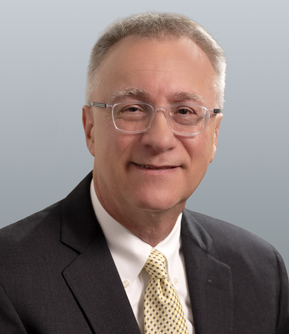
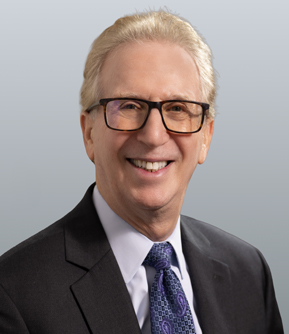
In this return appearance on the Open For Business podcast, Stuart Brown and Norman Kallen are once again joined by Medal of Honor recipient and former investment executive Colonel Jack Jacobs. This time, he provides valuable insights into the impact of current global geopolitical conflicts on middle-market and small businesses. Colonel Jacobs addresses the resilience of the equity markets, why the midterm elections are less predictable in 2026, and why businesses must carefully husband resources in the current climate. He also discusses why big business has an obligation to the larger economy, though most transactional activity occurs in small and medium-sized businesses, and why the “American experiment” remains durable.
Colonel Jack Jacobs on Global Conflict and the Middle Market
Welcome back to the show. I’m here as always with my co-host, Stuart Brown. Stuart, how are you?
I am doing well, Norman. I am very excited because this is a special episode where we have a repeat guest.
This is really going to be interesting, I think. A lot has happened around the world with our country since our initial interview with this particular guest. I think this is going to be absolutely intriguing.
We are joined by US Colonel Jack Jacobs. Once again, Colonel Jacobs has agreed to give us a few more minutes of his time. As those of you who are loyal audiences will remember, Colonel Jacobs is a Vietnam veteran. He is a Congressional Medal of Honor winner and the recipient of many other awards as well. Since retiring from the military, Colonel Jacobs transitioned to Wall Street, where he has held several senior leadership roles in the financial industry. He was a managing director at Bankers Trust and later at Lehman Brothers. Today, he is both a financial and a military analyst on television and elsewhere.
—
Jack, welcome back to the show.
Thanks for joining us again. We really appreciate your time.
My pleasure.
How Businesses Should Deal With Geopolitical Risks Today
I assume you have been busy with everything going on around the world. Why do we not just start now? Let us just jump right in because there is a lot to talk about. That is why we wanted to have you back again with your knowledge, experience, and awareness. In light of what is happening globally, from the Iran conflict to our issue and tensions with our European allies to what is happening with Russia and Ukraine, from a business leader’s perspective, how do they deal with geopolitical risk today as compared to 5 or 10 years ago? What should a business owner be looking at today, and how to lead his company or her company?
It is more difficult now, obviously, than it was in the past when there was some stability, and as long as there is a lack of stability, there is going to be volatility. What is really interesting, if you take a look at the equity markets, is the fact that they have been very bullish, notwithstanding all the problems involved. They have been bullish even though rates remain high. They have been bullish despite the fact that there are wars going on, some of which we are participating in, and so on. The equity markets seem to be quite resilient. It defies expectation to the following extent. There is always an explanation, and frequently, there is more than one thing that has an impact on what is going on.
One of them may very well be the expectation that things are going to get better. There is a perception that no matter how much volatility there is in the marketplace, no matter how much it seems that we do not really know what we’re doing, we do not know what resources we have available to have an impact on the world scene in terms of national security, it is all going to end eventually, and things will get quieter. I cannot think of any other explanation other than people really believe that things are going to get better. Otherwise, it would not look like it does.
What is your opinion on that? Do you think things can return to the “norm,” or whatever that may be?
It is hard to say. We are going to know in November, will we not? A lot of it has to do with what is going to happen in the midterm elections. Typically, the party in power loses in the midterm election, but there is a fly in the ointment here. That is the Supreme Court, which is permitting the kind of gerrymandering that is going to continue. It is hard to say what is going to happen. Whatever happens in November is going to be undone, perhaps the following November. Your guess is as good as mine. It is very difficult to predict what is going to happen.
I want to discuss the impact on middle-market businesses. Towards that end, as you mentioned, the stock market is doing well. Large multinationals can always hedge energy and geopolitical risk, but middle-market companies typically cannot. Where do you see them being exposed right now?
Rates are the single biggest one. It is interesting to note that no matter what you think of Trump, the middle-market guys are strongly in favor of getting rates reduced. Everybody wants the rates reduced. It is not going to happen anytime soon unless you reduce the independence of the central bank. The biggest independent variable here is the creation of new businesses and the expansion of business currently extant. The biggest problem there is the rates. The big companies have plenty. They have got plenty of cash, man.
Everybody wants interest rates reduced. But it will not happen anytime soon unless you reduce the independence of the central bank.
They have got plenty of dough. Insurance companies, reinsurance companies, pension funds, and finance companies. There is plenty of cash out there. If you do not believe me, take a look at where the equity markets are. That is what is driving all of this. Middle market businesses rely very heavily on middle market consumers and the maintenance and expansion of their own businesses. Both of those are heavily reliant on interest rates. As long as rates stay where they are or even go up, God only knows what is going to happen. It is going to be extremely difficult for the guys you are talking about.
The Wide Impact Of Fuel Prices
Let me ask you as well, besides the rates, the cost of fuel has had an enormous impact on profitability, on logistics, and all those industries that use all that fuel. Besides rates, the impact of fuel and people say, “Once this ends, it’ll go down pretty quickly.” I do not know whether you see that happening or not. Obviously, there is a lot of price gouging that always takes place in those types of markets. In addition to the rates, with this fuel issue, which has almost been worse because it has gone up so quickly, how impactful is that?
I point to the three F’s, that is, food, fuel, and fertilizer, and all that depends upon the price of oil. Commodity prices, generally but particularly oil, are subject to a very strange phenomenon. It confounds people that when the price of oil futures goes up, or something happens in the Middle East, futures go up, and the price at the pump changes instantaneously. The reason for that is that in most commodities, but in particular fuel, oil, and all the stuff that results from that, food, fertilizer, plastics, and all the rest, everything we use every day, the market demand for it is spot, and the supply is forward.
That is why you get something of an inverted curve. That is why when there is some gastrointestinal difficulty in the Gulf, the price of gasoline is going to go up at the pump instantaneously. It is certainly true that when things ease up in the Middle East, as they ultimately will one way or another, one time or another, you are going to see a precipitous drop in the price of oil futures and a concurrent drop in the price of gasoline. The dislocations that will have resulted in the interim, the kinds of things we are talking about, like the oleoresins and plastics and food and fertilizer, matter.
If you miss the season because you cannot buy fertilizer, the impact of that on the food supply is felt a year down the road. It stinks having to pay an extra dollar a gallon, and most people live from paycheck to paycheck, and it sucks. The midterm and longer-term impact of what is taking place in the fuel market, the oil markets, is going to be felt for quite some time. It is going to take a while to recover.
Agreed. It is interesting, Jack, this is a very positive negative discussion based upon what we have spoken about so far. Let me try to change the attitude a bit. Let us talk about risk versus opportunity for a moment. Whenever you have geopolitical risk or instability, it also creates opportunity, which I am assuming you would agree with. Markets, defense spending, reshoring, what have you. Where do you see the potential upside for US businesses in this environment, particularly in the middle market? You know that large businesses are going to be able to take advantage internationally. If you were advising a middle-market business today, how would you do so?
One thing to tell them is the same thing that you tell your kids. They have some money. The thing not to do is to just spend it, willy-nilly, spend it. I am reminded of the things we all learned when we were young soldiers about how to articulate and identify the objective first before you go ahead and expend resources. It is like the old thing that Lewis Carroll, who wrote Alice in Wonderland and Through the Looking-Glass, said, “If you do not know where you are going, any road will take you there.”
I love that quote. I heard that a few years ago, and I think it is a fantastic quote.
I think it is in Through the Looking-Glass, but I may be wrong. He is the person to talk about since Lewis Carroll was not even his real name. We have to be careful about quoting people who use aliases. We frequently make the mistake of not doing that in our personal lives, in our businesses, and even the government does the same thing. Without identifying, you see that today, in what’s taking place in the Middle East, is that instead of first identifying what it is we are trying to achieve, and then allocating resources. You cannot do that.
We teach young soldiers when they are 18, 19, 20 years old that what comes first is identifying the mission. Only then can you allocate resources, which are always going to be scarce. If you are a small and middle business owner or manager, your resources are always going to be scarce. Time, people, and money are all scarce. What you have got to do is think very clearly about how you are spending your money, what you are spending it on, and how you are going to know you have achieved either the intermediate or terminal objective when you are there.
Think very clearly about how you spend your money, what you are spending it on, and how you will know that you have achieved either the intermediate or terminal objective when you are there.
You have got to be able to say, “I’ve now achieved it.” You cannot do that until you have first identified what it is. If you want to grow your business, you need to identify the steps to get there. At what level are you going to be satisfied with the business growth over a specific period of time? If you do not do that, then you are going to be in trouble. For those who are scrambling from paycheck to paycheck, there is not much you can tell folks. They have got to husband their money to the best extent they possibly can without absolutely going out of business. It is hard.
Most businesses die in the first couple of years. For those who are at some level where the businesses can be maintained by the assets they currently have available, be very judicious about how you expend what you have got in the piggy bank, and make sure that you know where you are going before you go ahead and expend those scarce resources. Otherwise, you are liable to get surprised. For every guy who says, “I’m going to bet the house. I’m going to bet everything on whoever came in 23 to one in the Kentucky Derby,” it is just pulling out of his backside.
“That horse looked at me. I like that horse.” For every guy who hits a 23 to one shot or 2300 to one shot, we are talking about risk-adjusted return. There are a million people who bet on that 23 to one shot, and it does not come up. When you articulate the juxtaposition of risk versus reward, it is really important. Never forget the risk-adjusted return of what you are doing. It is nice to make lots and lots of money in an absolute sense, but consider what the risk was in getting there. If your risk-adjusted return is not attractive, you will never survive, even if you make a great deal of money on your first shot out of the barrel.
How American Companies Can Expand Their Businesses Overseas
Jack, let me ask you, when middle market companies particularly thought they made it and they said, “Now let’s look at a broader market base. Let’s look to Europe. Let’s look elsewhere,” with this strain between the US and its allies and certainly with the tariffs and other things going on, how impactful is that to American companies looking to sell abroad in Europe? Has that dynamic changed?
It has, but only in the short and medium term, because as we discussed, my view is that everything comes to an end, and this unpleasantness will too. The likelihood is that it is going to end fairly well. It may not, and difficulties may extend over a certain period of time, but eventually it is going to end. One of the biggest problems about expanding overseas is the strength of the dollar. The dollar used to be a heck of a lot weaker than it is now. As long as it remains strong, it is going to be a little difficult to sell products overseas.
The business relationships between American companies and foreign companies in Europe and elsewhere are very different, very much different than the political relationships. Whatever else we see at the top of the food chain on tweets and whatever else, all that stuff typically is not felt when people are talking about making money, about two partners in a business relationship making money. That transcends a lot of the political nonsense that we see, a lot of which is for political consumption and not for business consumption. There are lots of advantages in judiciously expanding business overseas, too. One thing to keep in mind is the direction of the dollar, and so far, it has been relatively strong.
Going Deeper Into A Fundamentally Different Era Of Globalization
Thank you for that. That was very insightful. As we get close to the end of our discussion here, let me ask you a more general question. Are we entering a fundamentally different era of globalization?
I would say that we have been in it for quite some time. If you take a look at this jacket, I do not know who made it, but it was not made in the United States, my guess. I have had this jacket for probably 30 years, and my guess is it was not made in this country. As we all learned when we were very young, there are advantages in focusing your attention on the thing that you do best. If you make X and you can exchange that for services Y, everybody is going to come out ahead.
American business has become far less competitive for a wide variety of reasons, some of which are inherent in the American economy, some of which are inherent in the American political way of doing business, and some of which are inherent in the American financial system. It did not fundamentally change last Thursday. This has been coming for a long time. How are we going to fix it? Quite frankly, it takes a great deal of leadership to change anything. As any business owner knows, you cannot just sit around and wait for stuff to happen.
The likelihood is that it will not happen, or a large grand piano is going to fall on you and flatten you. There has got to be leadership. The only way we are going to become more competitive is through both political and business leadership. Large-scale business leaders have to keep in mind that there are lots of folks in business in the United States who do not have large boards, who get paid a million dollars, get a couple of really good dinners each year, and do not have to make any contribution whatsoever to the running of the business.
The only way to become more competitive is through both political and business leadership.
The large majority of businesspeople in this country are doing their own stuff. I believe that not only the government, but I think big business has an obligation to the economy as a whole to recognize that the largest number of transactions that take place in this country are among, from, and to small and medium-sized businesses. Once they recognize that, I think we are going to be lots better off, but we have not yet. We need political and business leadership to recognize that.
Jack, before we break, do you think that can happen? Do you think the large business owners are insightful enough to say, “This is what we need to do”? Are they too greedy themselves to say, “What’s best for me? Forget what’s best for everyone else.”
They are not mutually exclusive. They should not be. For a period of time, they were not, but now they are. As I said, it just takes leadership. The Union would have fallen apart completely if it were not for two people, Abraham Lincoln and US Grant. Without those two people, there would not have been a Union in 1865. What did it take? It was not guys like me, for example, who were knuckleheads, or any of the other halfwits who were in the Union Army, who were in it for themselves. They were narrow-minded and so on. No, it took extraordinary leadership to change the course of American and world history during the Civil War.
Without those guys, it would not have happened. We need the same thing now. A lot of people are greedy, but somewhere, we need to nurture first-class leaders who are thinking not just about themselves. It is okay to be greedy. There is nothing wrong with that, but we are thinking more about the continuation of the American experiment, the American business experiment, and the American financial and political experiment. I do not know where these people are going to come from, but we do not need many of them. Right now, we do not have any.
How Midsize Business Owners Should Navigate Today’s Troubling Times
That is a pretty powerful ending, Jack. Thank you for that. Let me just give you the mic again. What are your words of wisdom for the midsize business owner whom we focus on in this show, in this very troubling time?
I do not know if I have any wisdom at all. These are difficult times, and it is very easy to get discouraged. The thing to remember is that in the end, the American experiment will out, and it will because small and medium-sized business owners did not get discouraged. They are the foundation on which the American economy is built. I do not do a lot of business with anybody. Most people do not do business with very few people, other than small and medium-sized businesses. If you think about it, do not get discouraged, husband your resources.
Sometimes it is also useful to work together in your communities to make sure that you do not just survive, that other folks, your compatriots, survive. I am reminded of the observation of Benjamin Franklin, who, before the Revolutionary War actually started, wrote, “We either hang together, or we will surely hang separately.” This is a good policy for small and medium-sized business owners. Focus on yourself to be sure, but also band together and make sure that you all survive.
Jack, I think you see that when you watch local news, not national news. You hear some good stories about that. People do think that way, which, I guess, in light of these times, as Stuart said, is hopeful for all of us that the small and mid-sized business owner sees it. Hopefully, at some point in time, you get the right people in the top levels of leadership who will see that as well.
The people we are talking about are enormously powerful for us. Think about what would happen to the economy if we were able to harness that energy in communities around the country. You would have a dramatic uptick in the fortunes of everybody in all institutions in the country.
With that, Jack, let us end on that positive note. We really appreciate it. Thank you once again for joining us on the show, especially in these troubled times.
Thanks, man.
Have a great day.
You too.
Thank you for your time. Be well. Bye-bye.
Cheers.
—
Once again, thank you for joining us on the show. We hope you enjoyed this special broadcast in light of the troubled times that we are living in today. We want to thank Colonel Jack Jacobs for joining us. Norman, as always, it has been a pleasure.
Thank you, Stuart. Likewise, it is always wonderful to have the insight that Jack brings to the table. It is really a unique perspective. As you say, with all these negative things, there is always a light at the end of the tunnel in his mind.
If you enjoyed this broadcast, please subscribe to the show. We look forward to bringing you our next episode. Thank you.
Have a wonderful day, everyone.
Important Links
About Colonel Jack Jacobs
Through the ROTC program, Jack Jacobs joined the American Army as a Second Lieutenant. He was an executive officer of an infantry battalion in the 7th Infantry Division, a platoon leader in the 82nd Airborne Division and the commander of the 4th Battalion 10th Infantry in Panama. Jacobs was a professor at the US Military Academy where he taught comparative politics and international affairs. He was also a professor at the National War College in Washington, DC. He served as an advisor to Vietnamese infantry battalions during both of his deployments to Vietnam, earning three Bronze Stars, two Silver Stars and the Medal of Honor, the country’s highest combat honor. In 1987, Jacobs took his Colonel retirement.
He was the founder and COO of AutoFinance Group Inc., which was one of the companies that invented the securitization of loan instruments. He managed foreign exchange options globally as a Managing Director for Bankers Trust and was a partner in the institutional hedge fund industry. Jacobs later established a comparable company for Lehman Brothers before returning to retirement to explore investing. He serves as a principal for The Fitzroy Group, a company that invests both on its own account and in joint ventures with other institutions and focuses on the development of residential real estate in London. He is a Director Emeritus of the World War II Museum and serves on the boards of several charity organizations.