Beyond the Numbers: Successfully Selling Your Family Business with Adam Blecker
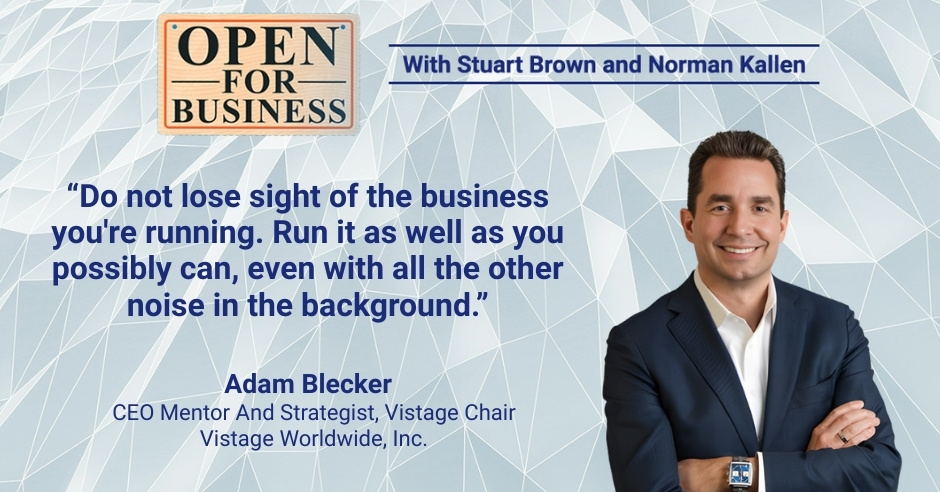
Money and family – two of life’s most powerful, and potentially volatile, forces. What happens when they collide in the high-stakes arena of a family business? That’s exactly what we’re exploring today. Family business succession planning is a minefield of emotions, expectations, and often, unwritten rules. Our guest, Adam Blecker, has walked that path. From co-founding a top-tier home healthcare agency with his father and siblings, to facing the unimaginable, and ultimately, orchestrating a successful sale, Adam’s journey is a masterclass in resilience and strategic foresight. Get ready for candid insights on navigating difficult conversations, the absolute necessity of documentation, and why sometimes, even happy endings can feel a little somber. This isn’t just business; it’s profoundly personal. Don’t miss it.
—
Beyond the Numbers: Successfully Selling Your Family Business with Adam Blecker
Welcome back to the show. I’m here as always with my co-host, Stuart Brown. Stuart, how are you?
Norman, I’m doing well. How are you doing?
I’m good. I’m doing just fine, so this is good. Anyway, we got some good topics of interest, so let’s get to it.
Norm, we’re going to focus on a business topic that’s very close to many of our readers and very personal, in fact. We’re talking about family business succession planning. We’re going to be joined by our guest, Adam Blecker. He’s a healthcare industry veteran and former family business owner. Adam has more than two decades of experience in home health services and elder care. He was the president of a company called Solutions in Place and a strategic advisory board member for Alliant Group. Alliant Group seeks to strengthen the private duty home care community throughout the United States.
Adam co-founded the health care agency Seniors in Place with his father and his siblings and served as its CEO. Under his leadership, Seniors in Place became a top 5% private duty home health care agency in New Jersey. He successfully sold that business in 2022.
Being that family business succession planning involves both money and family to dangerous topic. The topic and the issues related to this topic couldn’t be more personal.
Adam’s Background and Entry into the Family Business
Adam, welcome to the show, and thanks for joining us. Why don’t we jump right in? Before you got involved with the family business, because obviously we know you very well, and we’ve been down this road before in discussing family businesses and family transition planning. Give us your background when you got involved in your family business, and more importantly, why you got involved in your family business?
Thanks for having me on. Going all the way back, when I was working for Super Foodtown. I remember getting home from that day at work and saying to my dad, “I’m not working for Super Foodtown next year. No way.” My prerequisite was “I want an office with air conditioning. That was it. That was the bar. Give me air conditioning.” The next year, before the summer began, I went and I went to every office building I could get to on my bike in town, I knocked on every door, and I just asked for summer employment. There was this one door, it was like on the third floor of an office building. It was just like a larger, it was a little imposing. I skipped it. I was like I’m waiting for the elevator to come get me.
I just, “What do I have to lose?” I walked back to that door and knocked on it. It changed the entire trajectory of my life. I met a man by the name of Bob Janicek, who took me under his wing as my mentor, taught me how to computer program and code. I started at a very young age writing commercial software. I was involved with Bob for three different technology startups and just had a great experience in entrepreneurship, growing, developing, and creating something that had some staying power.
It was a really interesting start about thirteen years of that journey through three tech startups, raising venture capital, the whole thing. During that time, I also lost my mother. She passed away at 50 years old. That changed the way I perceive impact and life. I just started to feel like life is short, and I want to have a mission and impact and do something that’s meaningful.
Eventually, what I wound up doing was my father had started a companion-only home care business, and I wound up joining him with my sister, and then ultimately my brother, and the four of us co-founded what would become Seniors in Place, which was a healthcare service firm that provided hands-on in-home care. It was really in the memory of my mother, to be honest, and that desire to have an impact and do something that was meaningful in the world.
You had a successful career before Seniors in Place, then. I’m assuming your dad asked you to join him. What was going through your mind at that point?
At first, I was a little excited about it. When I was working in the tech space, it was like a family. We were working until 2:00 AM and 3:00 AM, taking naps in the closet. Just coding and working, and developing great technology, and enjoying it. I had that ride, but I also had the experience of bringing on venture capital, bringing on an executive-level team.
People I was excited to meet and be a part of, and then learning very quickly that a lot of people live in this fear space and fear drives. It’s not the same as a family business where you’re growing and you’re inventing things together. There were a lot of things that I learned not to do at the tail end of that journey. I’ll tell you this story. Now here I am, I make the decision, I give 3 or 4 months of notice, I train a whole team to take over.
Now I feel really good about my transition. I remember I’m sitting on my father’s front porch, and it’s the weekend before I start my first day at the office on Monday with my dad. He says to me, “Adam, there’s an office building in Springfield that’s going out of business.” Here we are on Sunday, we’re driving over there. I’m in my Cole Haan shoes, climbing into a dumpster. Perfectly good office chairs and a filing cabinet.
He has Cole Haan shoes.
I’m rethinking my career choices.
To bring a squeegee with you, just in case?
Yeah, that’s right.
Defining Roles and Managing Tensions in a Family Business
When you decided to join your family business, did you engage in any pre-planning with your family members? If so, how did you convince them, or did they convince you what was the right thing to do?
My father did a few things really well. One of them was to be very intentional about the roles that he thought each one of us sat in. That clarity helped a lot. It was like, “I’m going to run this thing.” My sister was in charge of sales. My brother was in charge of marketing. Those were very clearly defined roles that we sat in. I’m the youngest of the three, but somehow it just worked that way, and we all rally behind that.
You must be intentional about defining everyone’s roles because that clarity can make all the difference.
Was there any tension with or each of you accepted that “You know something I’m good at that role that’s a good role for me,” because I assume your father looked at each of you. Based on his knowledge of his children, pick those roles obviously.
I think for the most part, from the zoom out, these are the roles. That was quite easy. We all just fell into line and felt good about where we were within the organization. Was there tension? Of course, there’s tension. It’s a family business. I’ll often say that family business is on one end, it’s incredible because you get to work with people that you love and care about and trust, but on the other end, the risks go way outside of the bounds of normal business. You’re taking a risk on your business, and you’re also taking a risk on the most important people and relationships you have in your life. That doesn’t necessarily prevail through a family business. We were fortunate that we were able to get through all of the hard times and still be a really tight-knit, good family.
Before you got on, we did our introduction, and we talked about family and money. It cannot be more personal, it cannot be more treacherous to subjects.
Just in life in general, we probably all have these stories of just knowing people were tight-knit, good family, a lot of care, a lot of love. At the end of a succession plan, or there’s death, or there’s inheritance, or whatever. If it’s not done right, if it’s not well communicated, if it’s not well documented, you get into these situations where families get completely and utterly ripped apart because the intentions weren’t made clear and the documentation didn’t support it. I’ve just seen that over and over again.
At the end of that process, it’s a journey, not a destination. It takes time, and it’s not static. It’s fluid. I’m assuming, though, and maybe you can address this, as you went through the process, was it therapeutic for the family? Did you find it more stressful for the family?
Therapeutic, oh my God. What I’ll tell you is that I think that we were very well-intentioned as to what we wanted. One of the critical aspects was to protect the business because without the business, and considering it as another entity in the room that we can all go after what we want, but if we own the business, none of this even matters. I don’t think I would use the term therapeutic.
I would also say to you, I wish that I could say to you, we had it all right. We sat down, we sat in a room, we had this great conversation, we documented this thing, we all signed it, and lived happily ever after. It was not that easy going. In truth, we had this document that we had handwritten basically. The real catalyst for going from having that document to having something properly done with Norman in the room was this scenario.
My father got sick, and he was internally bleeding. He was in the hospital. I have a really strong relationship with my father. Best friend in my life, my mentor, a man I care greatly about. Here he is, he’s in the hospital, and we don’t know if he’s ever going to make it out of the hospital. We don’t know what’s going on. I’m showing up for my dad as his son, going through that experience. I remember I’m at St. Bernard’s Hospital, and I’m sitting in my car after seeing him, and just this tsunami of grief and regret just consumes me.
It’s so critical to have that operating agreement in place and to evolve it over time.
As I play out, here I am, as the son of my father, but I also am the CEO of this business, and this document that we wrote with the best intentions, without the legal advice that was required. As I’m thinking about what’s going to be triggered in the event that my dad doesn’t make it out of here, it occurs to me that we’ll be out of business. That this legacy that my father feels he’s passing on, that we have invested so much time and blood and sweat and tears into, just evaporates because we have terms in that agreement that are unsustainable.
That was a moment where it was like, “We’ve got to redo this and we’ve got to do it right.” It’s hard to balance all of that. As a son, as a CEO, as a business leader, as all of those things coming to fruition that we are colliding at one time. Thankfully, my father did make it out of the hospital, and he did heal, and he recovered, and he was okay. We were able to then get that second chance, that second at bat, to really get intentional about the document and do it correctly.
The Importance of Operating Agreements and Documentation
Adam, based upon your experience, what would be your recommendation or advice to family business owners as to when it’s appropriate, when’s the right time to document the relationship, to sit down, have the hard talk? Stuart and I have always run across, we talk about this on a regular basis. When’s the right time? When do you need to come to that realization, something like, “Let’s go talk to somebody.”
If you’re listening to this show and you’re in any business with a partner, family, or otherwise, and you do not have an operating agreement, the right time is right now. If you’re small and you’re tiny, it won’t be that expensive. Just do it. If you have scale, then it’s even more important, but if you don’t have an operating agreement, these casual conversations of intention do not get it done. It misses a lot of the stuff we don’t want to confront, we don’t want to face, we don’t want to talk about.
It’ll just work itself out. It doesn’t work itself out. Sometimes it does. Sometimes it creates so much more pain and suffering. When we get to sit down and have a real conversation, to me, if I meet anybody that’s in business and they don’t have an operating agreement and they’re in a partnership, it’s my first line of advice. Go get it documented. It’s not a big deal. Let’s do it.
Yeah, it’s no different than someone’s will. Things change with time. It has to be a living document that over time you’ll revisit it, and then you decide that something we need to update it, we need to change it, we need to do whatever because circumstances have changed.
Norman, I would add to that, a will is an instrument that is executed on death. This takes into account the whole death element. It is also an instrument that guides the business relationship as you move it forward. As you take on opportunities that emerge, how are we going to decide to sell the company? How are we going to decide to take on a strategic partnership? How are we going to decide to vote on this thing and move offices or move locations, or expand, or reinvest? Let’s get all that stuff documented and get it on paper so that we can grow it, so we can scale it.
Unfortunately, you worked with Norman. You should have found a good professional, but you worked with Norman.
I tried to convince him to go to somebody else, but he wouldn’t leave me.
Obviously, I’m kidding, not, but in any event, when working with your family and trying to come up with the document, whether it’s an operating agreement or a shareholders agreement, I don’t care what you call it, you can call it a potato agreement. When you’re working with your family to create that guideline, those rules, if you will, you have your attorney, who else would you suggest be involved in that process?
For me, it was really about having Norman in the room to have the hard conversations when we were drafting the document. It took time. It was not a one-and-done thing. The other thing that we did as a family that was impactful and important to the growth of the business, I was a member of Vistage, which is a CEO Peer Advisory Group. The first month I joined, I met a man by the name of Jason DeSalvo. He was in the family business, and he pulled me aside and said, “Adam, one thing I would recommend you do as you journey forward is get a family business therapist.”
If you’re running a family business, one of the best things you can do is get a family business therapist.
He gave me the name of someone, and that woman, absolutely amazing. We would meet as a family with a therapist every two weeks. We had a chair for the business in the room, so that we were cognizant of why we were there. It ties into this operating agreement piece, but it’s bigger than that. It’s all the difficult conversations that we have to have with one another. Having a professional in the room help guide and orchestrate those conversations so they don’t just devolve into chaos, and keeping the business as the center focus of why we’re there was impactful.
What about your accountant? Was your accountant involved in the process?
Not in the minute details of it, but certainly as an advisor, and when we got into the valuation of the business and how to structure that part of it, he was definitely instrumental in the document as well.
Did you use valuation professionals, or did you rely upon your accountant for that?
We relied on our accountant.
What about insurance? You mentioned earlier, you were talking about buy, sell and disability and life, and so on and so forth. I’m assuming you had a competent insurance professional working with you as well.
Absolutely. It was critical to have an insurance expert that understood exactly what you just mentioned, Stuart, because it’s not like buying life insurance for yourself. We’re trying to buy it and buy it correctly and have the business pay for it for a particular intention, which is, if God forbid one of us passes away, we don’t wind up with having an ex-spouse as our business partner. Yet we also take care of the family. Those agreements are critical, and the insurance policies to back it up are critical as well.
Let me just switch gears a little bit. When you have a family business, it can be consuming in the sense that obviously you’re there 8, 10, 12 hours a day, but then you see your family on the weekends, on holidays, etc. How do you or can you, or should you avoid those discussions so that the business doesn’t become consuming to the family relationship? Not saying that it is anyway, but you need some break a little bit. How did you manage that? If you did that at all, what would be your advice to anyone who has a family business? Why is that important?
Listen, we didn’t get it right. We tried hard. I would say to you that like Thanksgiving was like a board meeting.
You’re killing two birds with one stone.
Before we jumped on this, when we were just chatting a little bit, I was talking about our family vacation. As a family, we would vacation on Long Beach Island every year. I’d like to say that we had perfect boundaries, and we just enjoyed ourselves. Listen, I think it’s really important to be aware of the boundaries and to do your best to have some separation so that you’re not letting the business consume your life.
I think that goes beyond just the family business element. It goes into entrepreneurship in general. What are the boundaries that you’re defining to live a life and be there for your family, your immediate family, and others? Also build this entity, this organization that you’re trying to create with the vigor that’s required to get the thing going. All that to say we didn’t do a perfect job at it, but we did have an intention around it. We had conversations around it.
You know what, Norman? I’d say one more thing. It goes both ways. My father was my business partner for 10 or 11 years. I got to have moments with my dad that most sons don’t get to have, business, lunches, and creative thought meetings, and how are we going to do the business, but also just how are we going to show up for each other? That’s a time in my life that I’ll never forget. I wouldn’t have had that if I weren’t in a family business. I would have been working hard for somebody else. Maybe not had a daily conversation with my father.
When you were formulating this document and working through your succession plan, did you discuss potentially some exit, leaving the business, selling the business, what have you?
Navigating the Exit/Sale of the Family Business
We talked about it in a couple of different ways. In the beginning, it was more like, upon exit, how do we take care of everybody? What’s that whole structure look like? Part of it was the equity ownership of the company and how that was structured. Part of it was in the event that something went sideways, what’s that exit look like? It wasn’t like we had a super clear defined exit plan. We were in this for the mission and for the long term. It wasn’t until later, after we went through the process of buying out my brother and my father, that my sister and I really got serious about scaling the thing up. It wasn’t even at that time when we were considering exit. Exit opportunities came to us at a point where we didn’t even want to exit. We went down that path.
Let me go back to your dad for a moment. Your dad originally founded this business, correct?
Correct. Let me just say he founded a companion business called Seniors at Home. When I came on board, the family, the four of us co-founded a healthcare service firm. The delineation was in a companion business, its hands-off care. What I recognized very early on is that people immediately need hands-on care. That’s a very quick transition. We developed a healthcare service firm together with registered nurses and certified home health aides, and accreditation, and all of that. That’s the business that we co-founded together.
In your experience, give our readers three important points that you would have wanted someone to give you when you stepped into your family business. How do you begin?
One thing that came naturally to me was that I was stepping into this position as the CEO of a company that I was just starting out with my family, a healthcare service firm, very mission-based. I had very big dreams of what we could do with this. I had no idea how to run a healthcare service firm, no idea whatsoever. What I impulsively did was write down for me, not to put above the printer, but for me what my core values were.
Writing down your core values provides a framework for making decisions when you don’t have the answers. You can lean on those values to guide your choices.
What am I doing this all for? What is this all about? I just memorialized that. That gave me a framework for making decisions when I did not know the answer, because I could lean back on those values to process the decision and at least make it couched in that framework. That was one thing. Another thing is, my father was very clear on what our roles were. That was not up for discussion. That’s what it was. I think that helped us a lot. It gave us some structure and some boundaries within the organization as to where one stopped and one started, or started and stopped.
What was our control within the organization? What was our responsibility within the organization? That was critically important. I think that’s a piece of advice. If you don’t have that framework defined, define it. I guess the third one, I go back to this point. I feel so thankful that I had a friend pull me aside and tell me to get a therapist in the room and do that work, and have that person part of our journey was tremendously powerful. It’s like, I guess it’s those three.
You said you didn’t seek out an exit strategy, your goal is to scale the business, and the exit strategy fell into your lap. When that happened, when you realized, or when you and your sister came to the realization this could be a reality, what do you think about it? What was your mindset? How do you think about approaching the other family members, and how did you approach the other family members in that discussion, or how would you recommend that people approach the family members?
In our situation, it wasn’t until after we had bought my brother and father out of the business, so two years after that. It was just me, my sister Mia, and myself at that juncture. What happened was that over time, I was very heavily involved in our industry. I was the president of the Home Care Association of America. I led that through a merger. As president of the Home Health Services Association of New Jersey, and led that through a merger with the Home Care Association of America, and was also on the board of trustees for the Commission on Accreditation for home care.
The point in saying that is that I was very connected with our industry. Through that journey, I met people that had the size and scale that at some point might be able to buy us. It’s interesting to build relationships and friendships with people of that capacity. It was like in a one-month period of time where three of my friends approached me and said, “Adam, we should have a real formal sit-down and just like start talking about how this might transition or what we might be able to do together.”
That set off the alarm bells. I remember being in Vistage and having experts come and talk about M&A and the sale of businesses, and having members process the sale of their businesses. I remember one thing that stuck out, and that is that the market is cyclical, that there are ups and downs in the market. There are times when you may want to sell your business, but you’re selling it at a down market, and you’re not going to get maximum value for it.
There are other times where there is an up market, where you can sell it, it’s like the right time to sell it. I took this as an indicator that the market is at a high and that there’s a lot of interest in what we’re doing. These are conversations that I should probably engage in. I also felt pretty strongly that the fact that I didn’t have to sell and almost didn’t want to sell was a pretty good time to have conversations with people.
I wound up having those conversations and also put a team together. I put professional resources around me because I knew if I’m going to sell this business, it’s going to be for all the marbles and it’s going to be the first time I’ve ever done this. We want to get an A. I knew that I wasn’t an expert in this area, and I wanted to surround myself with experts.
Selling a business is high stakes. It’s crucial to surround yourself with experts to make sure you get it right.
Stuart asked me earlier on the operating agreement part, the team on the exit part of it was getting an investment banker. In my industry, it’s very niche. There was a business broker who had transacted companies of my size and scale many times. I felt very comfortable with him selling in my industry, but I also recognized that that’s a very narrow perspective. I hired an investment banker who was also a friend of mine, who was willing to do this as a consultant and keep everybody on their toes, if you will. That’s a unique element. I don’t recommend that. That’s not the prescription. It was something I was able to pull off and pull together that was helpful.
When you and your sister realized in a moment, “We’re going to sell this business, and by the way, we’re not going to be going to work anymore in our business.” How did that discussion go? When did that come to you? What did your sister say to you like? Was it like an “Oh my God” moment, like not that it’s a bad thing, but it’s going to change our lives, what are we going to do?
It was a combination of both of us, I think, realizing that we’ve been peddled with a medal for a long time. There’s a limit to how much more we can give this. I think she was feeling that more than I was, to be quite honest. That was a driver in the process as well. In addition, the two of us were very apprehensive about even thinking day after sale. We wouldn’t even let that enter our minds of what’s the day after the sale. Again, we were just so in the process of running the business, in the process of going through an exit, and recognizing that it could just all go away.
The Emotional Impact of Selling a Family Business
For me, it was a moment of significant accomplishment and also a significant loss. My identity was so wrapped up in my business, what I was accomplishing, and the impact we were making. To literally like go into your office that you built and designed and grew and all that stuff. Pack your cardboard box and give everybody a hug and a kiss, and walk out the door, and then drive home. That’s an event.
What’s your second act? You need to think that through before you close your first act. As you just said, it’s a very somber moment. You need to have something ready to go because it can be difficult. You need a little bit of a hiatus, a chance to just catch your breath.
I think that’s part of it. Some people say, “I have a second act ready to go and I’m jumping in tomorrow.” Other people need some time to unwind and figure things out.
I think from my experience, I could not have planned out my second act while I was in the first. I just didn’t have the mental capacity to do it. What I did that was helpful for me was that I knew it would be an event, so I at least recognized that there would be a second act, and I’ve got to figure that out. I took a very intentional moment of pause.
For me, it was really about a moment of pause. I took three months, I had the summer of my life playing with my kids down at our shore house, and just like really leaning into that and didn’t let any of that noise carry me into the next step. What I wanted to be was intentional about what my next act was going to be. That intention was about like squaring we’re all in on this previous business. I probably gave it more than I should have. I’m not sitting here like with regret looking back on it, but I’m looking back on it, trying to gain some wisdom to say, “Am I going to do that again?”
Deciding, “No, I’m not.” Looking at like, “What are the things I’m good at that I don’t like doing? I don’t want to do them. What are the things I’m good at that I want to do? How do I square that with the life I want to live, the impact I want to have, and how I want to show up for my family?” I took real-time journaling, thinking, letting that seep in to come up with what my next step was going to be.
Norman, do you want to wrap up with our famous final question of the day?
Adam, this is great. Thank you. We conclude with a couple of personal questions at the end of here. Scotch or bourbon or wine or both or all three.
Less of all, but all of the above.
Not necessarily at the same time, of course.
I borrowed a drink and then maybe added a little flair to it. My favorite drink is something I call a smoking gun. It’s basically a smoked old-fashioned.
I have brought that up again and again. Smoked old-fashioned. I love it.
When I started this drink, though, I had this flamethrower that you would use like literally a flamethrower.
I’m sure it brings back memories as a kid because all little boys love fire.
That’s right. Here I am in my kitchen with a flamethrower, burning a cedar plank on a cutting board, like get you out of the like really glowing red. My point is, you can make one smoked old-fashioned. You cannot make the second one because you’ve already had one, and now you’re playing with a flamethrower in the kitchen.
It’s easy to ride the momentum of Act One straight into the next thing—but you want to be intentional about what your next act would be.
Just to let you know, by the way, the first time I had a smoked old-fashioned, I told Stuart about it, and then I bought a kit on Amazon, which was fabulous. Stuart loved it that he bought his son-in-law as a gift, a Smokey Kit. I don’t know whether you have one for yourself or not, Stuart.
No, I’m waiting, by the way. If you’re listening, son-in-law, that would be a good Father’s Day gift.
Father’s Day gift, perfect, yeah.
After almost burning my kitchen down, I did buy one of those kits. I recommend that if you’re going to do a smoked old-fashioned, get one of those kids.
Which I’ve done and Stuart has as well, or his son-in-law has.
Designing Your Second Act with Intention
They’re excellent. Adam, thank you so much. We really appreciate your time and your wisdom, and we’ll give you an opportunity now. If you have parting words for a successful family business or a small business, that doesn’t have to be a family business, what would be your one parting piece of advice?
I think it’s like, do it. Have courage, have a mission, and have impact, and go do it. Work together, build something meaningful, and lean in. We get one go at this whole life. Take some risks.
That is true.
Adam, it’s a great interview. Thank you. We appreciate your time. This was good.
Thank you very much.
Not that I haven’t heard it from you before, but it’s always good to hear it again.
I appreciate you both. Thank you so much.
—
That brings us to the end of this conversation. Those readers who are involved in family-owned businesses, I hope you find value in our conversation with Adam Blecker, who not only talks the talk but walks the walk.
Most importantly, Norman, communication and planning are the keys to avoiding or even dealing with conflict and family-owned businesses and ensuring a successful transition or a successful exit, or conversely, disaster, equally important. When necessary, consider bringing in third-party professionals to assist in the process. As always, thank you for tuning in. If you haven’t already, be sure to follow the show and leave a review. It helps others discover conversations like this one.
Thank you, Stuart, and have a good day.
Important Links
- Adam Blecker
- Adam Blecker on LinkedIn
- Adam.Blecker@vistagechair.com
- Solutions in Place
- Alliant Group
- Vistage
- Seniors in Place on Facebook
- Seniors At Home
- Home Care Association of America
- Home Health Services Association of New Jersey
About Adam Blecker

I build, lead and facilitate trusted communities of leaders who support one another to become better leaders in business and life. I’m here to help as many people as possible.
When I was five years into a 13-year journey as President/CEO of a healthcare services firm that I co-founded with my family, I had achieved success, but I didn’t know what I didn’t know. I was invited into a conference room of other successful and established CEOs. I felt like I was reaching up to grab the bottom rung of a ladder and pulling myself in – it was humbling.
I didn’t know it then, but this day was a nexus point. Over the next eight years, this group of people would change the trajectory of my life. I would grow my business by over 400%, serve and lead industry boards, achieve scale in my hyper-local market, and bring my business to a strategic exit.
Led by our Vistage Chair, he created a sacred space where we challenged each other, asked the tough questions that no one else in our lives could ask, and held each other accountable in a deeply meaningful manner. I reflect on his impact on the 18 of us in that room and how far it stretched into the thousands of employees, their families, and society.
With “Impact at Scale” as my true North, I partnered with Vistage to further this mission. Today, I am a Vistage Chair.
I’m interviewing high-caliber leaders to join my CEO Advisory Board in Northern New Jersey. If you’re ready to elevate your performance as a business leader, let’s talk.
I remain a staunch advocate for the elderly and disabled in New Jersey and love the sandy beaches of Long Beach Island and boating on Barnegat Bay.
Specialties: Board Performance, Board Communication, Executive Development, CEO Development, Leadership, Mediation, Business Growth, Revenue Acceleration, Mergers and Acquisitions, Technology, Business Exit, Succession, Executive Team Development