How To Handle Business Transition with Laurie Barkman
One of the absolute truths in running a business is that it will eventually end. Therefore, you must prepare for your business transition as early as you can to lessen the headaches when it finally comes. Laurie Barkman, the Business Transition Sherpa, helps business owners navigate this challenging process. She joins Norman Kallen and Stuart Brown to share valuable advice on preparing for a transition not only financially but also mentally and emotionally. Tune in as Laurie breaks down the benefits of business valuation, the right way to build a transition team, and the different kinds of potential business buyers to keep an eye on.
—
How To Handle Business Transition with Laurie Barkman
We’re joined by Laurie Barkman. She’s the author of The Business Transition Handbook: How to Avoid Succession Pitfalls and Create Valuable Exit Options and the host of the Succession Stories Podcast.
I’m very excited to speak with Laurie. She has become a pivotal figure in the world of business succession planning, mergers and acquisitions, as well as entrepreneurial leadership. She considers herself to be the “Business Transition Sherpa.” She has dedicated her career to helping business owners navigate one of the most challenging and often overlooked chapters in their professional lives, which is exiting their businesses. Her expertise stems from a combination of real-world leadership experience, academic rigor, because she is a professor, deep empathy for entrepreneurs, and a clear understanding of the financial and emotional stakes involved.
Laurie is more than simply an M&A expert. She is, in the truest sense, a bridge builder. She recognizes that business transitions are not merely transactional. They’re deeply personal. It’s a business that someone has owned for years, and it matters to them. Her work is centered around aligning the owner’s goals with business realities, ensuring a smooth path toward transition, without compromising either the company’s value or the owner’s legacy, which, at many times, is the most important thing to the owner.
I do believe that our audience is going to be not only interested in what Laurie has to say, but they’re going to be riveted to what she has to say because the exit for just about every business owner is the culmination of their business career.
Also, their lives, in many cases. Their entire lives are centered around running their business. Sometimes they’re so much the same that it’s hard to separate the two. Anyway, we’re here with Laurie Barkman. Laurie, welcome to the program.
Norman and Stuart, thank you so much for having me. I’m excited to be with you.
It’s our pleasure to have you on the show. What we strive to do is entertain and inform. We’re highly anticipating that this is going to be an entertaining and informative interview.
No pressure at all.
Laurie Barkman, the Business Transition Sherpa
I would love to ask you how you came up with the idea of the Sherpa here.
The biggest idea around Sherpa is that we are on a journey. We are on a journey as entrepreneurs, and I was a hired gun, if I can call myself that, hired from the outside to work in a third-generation company. I was a CEO running one of the divisions. This company went through a pretty big change, which was a sale. When we went through the acquisition process, I was one of a dozen executives who went through that process.
On the other side, it struck me how amazing this journey was for this company, which was 125 years old. My boss was the chairman. From an observational standpoint, I saw a lot of things that went well. In my experience over the years and focusing on this journey for entrepreneurs who are in the lower middle markets, smaller companies, this was a pretty big transaction. It was over $1 billion. Smaller companies don’t always have the tools. They don’t always have the resources. They don’t even necessarily have the right team around them to help them on their journey. That’s where the Sherpa idea comes from. We have a roadmap, we have tools, and we’re with you on your journey to support you.
Have you gone through a transition before the transition of your company?
No, I had not been through something like that. I was with startups, as well as big corporates. You talk about transition. The answer literally would be yes. You work in a big corporation, and you’re dealing with transitions all the time. People are retiring, people are leaving, divestitures, divisions, getting shrunk, or growing. I had been through those kinds of things, but when you’re in a public company or if you’re in a startup like I was, those companies can get sold. Some of them were eventually, but not while I was there.
Did you have somebody acting as your Sherpa along the way?
Create a business that can be sold at any time. It is a testament that you have a well-run business.
No, I was one of the members of the executive team. I think the biggest thing was that we were all supporting each other. This was a transaction that I’m going to say was a bluebird. That bluebird is a guest who rings your doorbell one day, calls you up, or sends you an email and says, “I’m interested in buying your company.” As big as this transaction was, it’s so hard to believe that it was out of the blue. That’s the story for this third-generation, 125-year-old company.
This was a global 50 company, and they told us that they had been watching from afar for about 6 or 7 years. We had no idea, but when they were ready, they approached. That’s one of the big messages that I always talk about whenever I can to help educate business owners that you never know when that little bluebird is going to come knocking on your door. To have a business that can be ready to be sold at any time means you’ve got a well-run business. It doesn’t mean you have to sell, but it means you could sell. Isn’t that a good option?
It’s interesting you say that because when we hear people talk about preparing a company for sale, the common statement is that it’s never too early. You should start earlier rather than later. When you get that knock at the door, no matter when it happens, you’re ready.
That’s right. A lot of people hear exit planning. The word exit sounds so finite, like, “I’m going through that door, I’m going to close the door, it’s an exit.” That’s why I use the phrase transition. I described it earlier when you asked me about Sherpa. It’s a transition. It’s a movement from here to there. Exit sounds so finite, “I’m exiting, I’m leaving.” Maybe for some, it’s negative. They have a negative visceral reaction to it. They don’t like that word.
From a marketing standpoint, that’s one angle, but another angle is the emotional, practical standpoint of why I would use a word to describe something that we know inherently might turn half of the market off to feeling like they don’t want to participate. That’s a negative thing. Your question, Norman, is a great question. Here’s the big secret. Are you ready for the big secret? Exit planning, or preparing your business for an eventual sale, is good business planning. There’s no reason to wait. It’s like good hygiene. You’re going to wait to have good hygiene until you’re in your 60s. Of course, not. We’re not going to wait that long.
We always tell our clients, you start planning your exit on the day you form your company.
Creating Business Exit Options
You should. That’s for sure. Let me ask you, is there a difference between someone starting up a company and thinking about that, and in a family-owned business?
I don’t think that there’s a difference in the sense that we are all human. One hundred percent of us are going to leave our company one day. If we have an expectation, if we have goals, and we have a vision that we want to fulfill, then we need to make it happen. You can’t just have an idea in your head and make that the plan. We have to write it down, we have to communicate it, and we have to work on it. We’re 42% more likely to achieve our goals if we write them down.
What I find with business owners is they’re always in their heads. If they’re thinking about it or worrying about it or swirling around their head, but they’re not talking about it, is it a plan? I say no. If it’s okay, they’ve thought about it and they’re a little more crystal clear about it, but they haven’t communicated and enlisted a team to support them, is it going to happen? Probably not.
I think that’s where the rubber meets the road. Owners in a next-gen environment who have a date and a desire for this business to change hands, and eventually that baton handoff to the next generation, there’s nothing certain about any of that. That could happen, and that could not happen for a variety of reasons. They might sell to a third party.
Business acquisition is more than just price. It is ultimately about finding the right fit.
What I like to talk about and why I wrote a book about it is creating exit options. Let’s create valuable exit options. When you have time on your side, you can create more of those exit options and be intentional about it. If Plan A doesn’t work out, you have Plan B. If Plan B doesn’t work out, you have Plan C. That’s the prudent thing to do when we’re building a business as an asset, and it’s not just a job.
How Business Valuation Play into Emotional Readiness
You work on the valuation of a business, and you bring it to the business owner. Do you think that plays into the emotional readiness of a business owner when it comes to selling their business?
Let me back it up a step. There are people who come to me and ask for the valuation because they want to know the data. Whether or not they’re ready for a personal transition is a separate path. If they ask for a valuation because they’re inherently thinking about a sale in the next 12 to 18 months, chances are they’ve made it to that hurdle point.
A lot of times, there’s a health issue. They don’t always tell me that in the first conversation, but I eventually learn about it. It could be divorce, it could be changes in life. For folks who are still in the building stage of their business, maybe in their 40s or in their 50s, what I’m seeing more and more is that the education that organizations like Value Builder System, and I use their platform, the Exit Planning Institute, I’m a member there, and other organizations that are doing a lot of education is helping business owners see that they should be getting valuations.
Vistage, for example, has been investing in giving access to business owners to get valuations. It’s kind of an off-the-shelf product. There’s nothing wrong with that, but it’s a different product. To your question, I think that will help more business owners see that. It’s like going to the doctor’s, “I’m only going to go when I’m sick.” No, this is like a health checkup. You’ve got to go to understand what the owner’s metric looks like for your business, what the goals are that you’re going to set around it, and what we can do to improve it. If we don’t have any of those three things, then nothing is going to happen.
Three Categories of Business Buyers
How do you coach a business owner? How do you have the discussion when the buyer is either a strategic buyer versus a private equity buyer? How is your legacy going to be dealt with, and what is the next step? How do you differentiate between the two when an owner sits there and says, “I don’t know what to do. I want to sell it. I think I’m prepared. Price seems right, but I’m not sure who to go to?”
I’ve heard it over and over on my show, which is called Succession Stories, and I’ve heard it on other shows when sellers talk about their experience. Many times, they say that they didn’t choose the highest bidder. This is anecdotal, of course, but it would say that it’s more than just price. It’s more than money. It’s about fit. What I try to focus on with clients. It is helping them think through who should own their business after them. I wrote a whole chapter on it. I think it’s a super important topic.
Your list included two top-level categories. If I may, I’ll add a third. There are usually three top-level categories that I talk about with clients. The first one is strategic, as you said. The second is a financial buyer. To go up a level, the financial buyer is a category, and private equity is an example of that category. The third group, we call related buyers. Related buyers are insiders. They could be family, employees, or key stakeholders. I think when it comes to fit, it depends on the business and what they’re looking to do. Your question about legacy is a good one.
Encouraging a Reluctant Seller
How do you encourage a reluctant seller? What do you do when you know it’s time for them to sell? You can tell whether it’s an age-related matter or the person has done as much as they possibly can to build a business up, and they’re out of energy. How do you get someone to recognize that it’s time to sell?
There’s a gentleman who calls me every six months. I think at this point, he’s probably 75. I am not convincing him anymore. I’ve tried. He’ll call me and he’ll have a question. In my mind, I know he’s not going to sell. I hate to say it, but he’s probably going to die at his desk. It is one of those situations where you can’t convince everybody. There are people who say you’re going to leave horizontally or vertically. There are people who, for whatever reason, don’t see that financially, they’ll have the income that they need when they leave the business, or it’s just all they know. It’s their life.
Preparing a Business for Transition
Why don’t you explore that a little bit more? What do you mean by the business being ready, per se? I’m sure people are going to ask us.
There are lots of things that can drive a business value up or down. In general, I talk about eight of them. The biggest one is financial results and financial performance. That’s your profitability. It’s the industry you’re in, and it’s the geography you’re in. There are lots of things that will influence that category.
Customer concentration is a big risk factor for buyers generally, wouldn’t you say?
Absolutely.
I think what makes that so tough is that it’s not uncommon that sellers don’t recognize that. They don’t recognize the risk that a buyer faces from customer concentration issues. When they don’t, it becomes a difficult situation because their expectation is, “I’m doing well. My numbers are great,” but would you buy the same business with the same parameters? We try to tell our clients who are on the sell side, “Think of yourselves as a buyer. If you bought a company where your customer concentration was 20%, 30%, 40%, 50%, and you lost that business tomorrow, what would happen?
Exactly. What would happen? There are things that we can do to mitigate those risks with time. If it’s, “Okay, we need to diversify our client base so that the 22% is brought down to 18% or 15%,” great. That’s organic growth, or that’s other things we’ve got to put some strategies in place to diversify. Another strategy is to take a look at your relationships. Are they papered? Do we have contracts? Are they handshake deals?
When I worked at the big company that was acquired, we had a big handshake deal for decades with a very large retailer in Canada. When there was a changeover in management in Canada, we flew fifteen executives up there. We had to participate in an RFP, which is a request for proposal, which means we’re bidding and it’s more competitive on price as opposed to relationship. That was not fun.
That’s a good example, but it’s an example of what can happen when you take some of these relationships for granted. The transferability, as I said earlier, is a key criteria. That’s what buyers are looking for. When I say asset transferability, I’m not talking about chairs, bookcases, or printers. I’m talking about looking at your business and taking a hard look and saying, “If I’m a buyer, what do I want?”
There might be some non-obvious things that I would consider an asset that is transferable, maybe not. You have to look and see, but that the buyer values. If they’re included in your deal, if they’re going to enhance the growth potential, and if they’re going to help them get more value, price is what you pay, and value is what you get. It’s like Warren Buffett. What are the things that drive the value for the buyer?
Biggest Mistake in Selling a Business
Toward that end, what do you think is the biggest mistake that you currently see with owners when making a decision or preparing to sell their businesses?
I think one overlooked aspect is the owner’s dependencies. It’s still probably the number one. It’s within our four walls, so we can control it. It is hard. A lot of times, owners think that they’ll still earn an income after the sale. Maybe they’ll stay on as a consultant. Maybe they’ll stay on for a year or two in the transition. I think that’s murky.
One, we don’t know that that’s going to happen. I think financial planning is part of my answer here. We have to also layer that in with what their role is. If they’re not in the business, are there risk aspects? What we typically see, and I’m sure you guys see this too, is when buyers perceive risk associated with the seller staying in the business, like if there’s more owner dependency there, they’ll put in things like an earnout. How can we get a deal that’s more cash upfront or equity upfront, and not have this back part with an earnout, which can be a contingent payment as opposed to a committed payment?
How To Build a Business Transition Team
I want to change gears for a moment. In your book, The Business Transition Handbook, I’m sure you discuss in a number of different places the role that external advisors play in the successful transition. Toward that end, how should a business owner build their transition team?
I talk about this in a couple of different ways. I call it the BOAT, the Business Owner Advisory Team. Who’s in your BOAT? We’ve got to get the oars in the water, moving in the same direction at the same time. That’s tricky. It’s good to have somebody in that boat who’s calling the shots, the coxswain, if you know the rowing sport. That would be somebody like me. That’s the role that I play. I try to bring people together. I’m a Certified Exit Planning Advisor. All the other credentials are there.
The biggest thing, though, besides the credentials and the experience, is this mindset for collaboration. It’s super important. I don’t have all the answers. I don’t have all the experience. My swim lane is my swim lane. Lawyers like yourselves have your swim lane, the tax advisors, the ESOP specialists. Who do we need in the BOAT, whether it’s buy side or sell side?
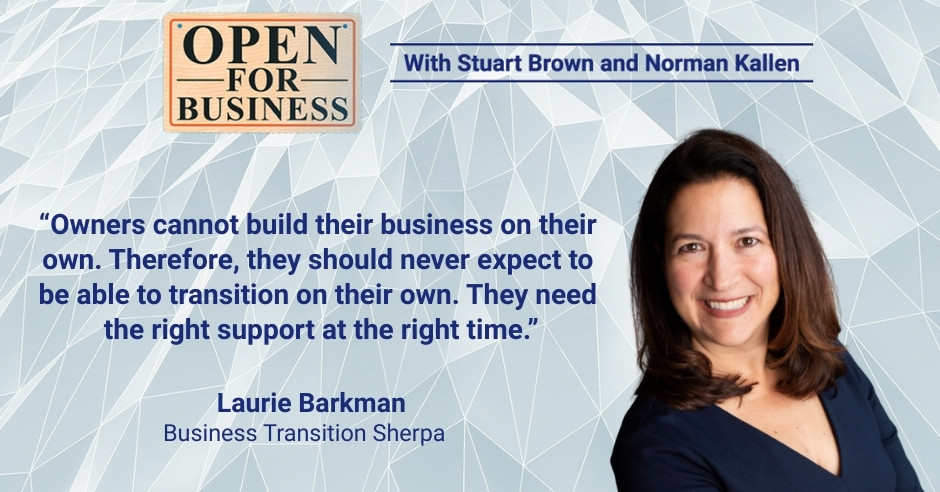
I have a client who’s buy side, and that’s the very first thing we did. It’s like, “Let’s assemble your BOAT. Who do we need in the BOAT?” We had a kickoff call and involved the lawyers and the tax advisors. They’re playing a critical role for the owner with great advice. We’re all looking at things with a different lens, and we’re coordinating. That’s the important aspect. I always say, “Owners aren’t going to build their business on their own, and so why would they expect to be able to transition it on their own?” They need the right support at the right time.
That’s a great comment. Let me ask you, what happens if the owner says, “I have my team in place,” and you take a look at that team and you recognize it’s the wrong players. That could be, “I have a small-time accountant who doesn’t focus on taxes, has never done an M&A transaction, and doesn’t understand the tax elections around.” Same thing with the attorney. “That’s my friend. He does my lease, he does my wills, he does this, but he’s my attorney, and an attorney is an attorney.” How do you address those issues with the business owner?
I put it out there upfront. If it’s a sell-side client, I ask them what support they have currently. I push them on the experience of their team members. If it’s like what you said about the lawyer who doesn’t have mergers and acquisitions experience, that’s a pretty big one. I ask them upfront, and I make introductions as needed. I always tell clients that my Rolodex is their Rolodex, and we’ve got to get the right people on the team.
I haven’t had a client have the wrong partner yet. I think that would be a detriment to the process. I have some clients now that have experienced attorneys, but our deals aren’t far enough along where I can throw a red flag. My game plan is let’s say, I can tell through the process that their attorney is either too slow or they’re not commenting on things that they should be, then I’ll play my role, which is, “I have your best interest here, let’s get somebody else on the team.”
Navigating the Complicated Transition Process
You use the terminology process. That’s a term that Stu and I use all the time with a client. It’s not the transaction. It’s a process, the M&A. They need to understand that because there’s so much involved, it’s time-consuming, it’s consuming as well, and you have to understand the process. How do you explain that to the business owner?
Legacy comes up mostly with internal transfer. If a best-fit buyer is external, legacy is typically not in the conversation.
Pretty much right up front. My affiliation is with Stony Hill Advisors, and we’re a national firm. We always share the process. In the first call, if they’re interested in learning more about what we do and how we do it, we share the process. One of the very first things that I do with a client in my kickoff call once they become a client is develop a Gantt chart. That’s a visual, where the calendar and all the steps are laid out visually there with dates.
Is it going to be exact? No, but it’s pretty darn good. When you look at A to Z and like, “If we kick it off here, chances are, the closing date is around this time.” That’s always a question. “How long does it take?” Of course, the answer is that it depends, but it’s a way to map it out so they understand what the roadmap is, what the steps are, and what we need to do.
New Business Transition Trends Today
Laurie, that raises an interesting question for me. In the current economic climate, have you noticed any new trends in M&A transactions that business owners should be aware of, for example, the duration of a transaction?
Again, I think that’s going to depend. I think the macro is still the economy. There’s still hesitation because of interest rates. There’s some skittishness in the market because of changes with tariffs. I have one buy-side client, I can’t go into any detail, but they are looking at an eCommerce business. It’s a relatively small deal, relative to the size of their company, but they see it as a strategic opportunity. There are lots of things in the positive column. Could they put it off? Sure. If you can secure financing and your cashflow of the deal will help you service the debt, that’s the lens.
If this is a strategic deal, there’s never going to be a perfect time for something. Are the macroeconomic factors slowing some deals down? Probably. What I’ve been saying when I get asked this question is that I think what happens in these times is that the best deals will still go to the surface. There is still going to be demand for them, which means everybody else is maybe stuck. The companies that think they’re going to sell, let’s call them the mediocre companies, those are probably going to be for sale longer. The ones that are ready to sell, sell ready, great business, have all the things in place, those are the ones that are still going to have more competition.
Dealing with Legacy and Succession Planning
I want to go back to the term that you used several times. The word legacy, the owner’s legacy. How do you deal with people who are concerned with their legacy and people who aren’t? How do you convince them that legacy, while it’s a very important element of the transaction because it matters to them, they built up the business, it shouldn’t be the end-all either?
It shouldn’t be the end-all, either. I think legacy comes up mostly with internal transfer. If a best-fit buyer is external, legacy is not typically in the conversation.
Let’s talk about family businesses for a moment or two. For family businesses, succession planning, I would call it rather than transition planning, but either/or, can be incredibly emotional, as you know. How do you mediate between family members when their visions don’t align?
I serve on a couple of advisory boards for family-held businesses. One of them is some brothers. I think my experience with that group is helping me see that sometimes informed advisors can help with the process. We try to take the emotion out of it by introducing a process when a process doesn’t exist. It could be that a process is broken. In this particular case, we haven’t had a particular process existing for them to collaborate and communicate about some fundamental strategic planning issues that need to be addressed.
You recognize that maybe the younger generation isn’t capable of running this business by how they talk, what they say, etc. Have you run across the circumstances where you had to have that real heart-to-heart talk with the owner and say, “Maybe it’s time to sell the business to a third party?”
If more people will surround themselves with individuals who can support and point them in the right direction, there will be a lot of upsides.
Yeah. There was a husband and wife, and I did an assessment of the sons to understand the two main categories. One was capabilities, and the other was intention. Those are different. What we discovered is that there was a disconnect with those things. All of them are capable, don’t get me wrong, but there was one son who was off the charts, and the parents saw that potential. However, I think his vision was different from what he wanted to do and pursue in his career.
That’s common, like, “We have capable children.” There might be a little bit of interest, but in other situations, there’s no interest. It’s common now for kids to be like, “No, thanks. I’m going to go do what I want to go do. I’m not interested in part of the biz,” or if they are interested in being in the biz, we’ve got a gap of like twenty-plus years, because the person with the name on the door, by the time they’re “ready” to lead and to be more tenured and experienced, the gen before them is probably out the door retired already. That means we need to skip the generation leadership solution.
Do you see any issues or tension when a non-family member who is a key employee is overlooked for an executive position because Mom and Dad want Junior to come into the business and run it?
I’m sure it’s out there. I do a lot of workshops. It was interesting because I had four workshops on four different days, and I had members from the same company in different sessions. In one of the sessions was one family member. Maybe he was a cousin or something. In another session was the father’s son, who is the youngest guy. Now, he’s been in the company for like a year. I had the hired gun leader folks in the other workshop. I was trying to get a vibe. I was trying hard to pick up on what was being put down, if anything. To be honest, I couldn’t get it in that environment.
You’re working effectively on succession planning as it relates to an event. Whether or not one of the business owners passes away, or becomes disabled, what have you, or there’s an irreconcilable difference, so to speak, between business owners, I’m assuming?
The majority of my work would be in the other category, which is that we envision one day selling this business to either a third party or to an insider. After that might be then to your question of what are the other things that could happen in the transfer, that’s where I bring specialists in to help. Sometimes, we bring in organizational psychologists. If things are really bad, we’ve got to bring them in.
I want to switch gears for a second. An odd question, an off-the-wall question. You have a podcast, Succession Stories, and you have people come on to talk about their succession stories, their success stories as well. Have you ever had a situation where someone talked about their situation, particularly a little bit, and threw you for a loop and said, “I need to rethink my approach to something because this is not what I was expecting.” I’m curious if that has ever happened on your program.
Yeah. There was a fourth-generation consumer products company, a bleach company. You’d buy the bleach in your supermarket. The fourth generation CEO was a brother, and then the other brother was in the business and marketing, or some function like that. They sold to a strategic. The brothers had a lot of lost love between them.
This was the icing on the cake. The transaction was largely beneficial for the CEO brother. The other brother and some of the other family members were supportive, but at the end of the day, it was just another transaction. They were out, and the CEO brother stayed. It was enough to put him into a depression. When we recorded, he told me that he could not walk down the bleach aisle in the grocery store. He can’t do it. He cannot see his product with another name on it. It hurts badly.
A Story of Inspiration and Dedication
Laurie, let’s end up on a high note, so to speak. Can you share with us one story that highlights a critical positive lesson other than what you’ve discussed already that you’ve learned after navigating businesses to successful transitions?
I have a wonderful client in his 40s, and he’s all about growth. He’s a sponge. He’s taken it all in. He wants to know what his company is worth. He wants to know what he should be focused on. Since I’ve been working with him, he’s doubled revenues, and the value of his business is going to continue to grow. He’s got a long runway in front of him, so he’s a good example of somebody who’s looking ten-plus years out. I love that.
If we can have more people who have that mindset to build with the exit in mind. When I met him, he was a $5 million company. He wants to be a $100 million company one day. I’m positive he’ll get there, and I’m excited to be on that ride with him. If more and more people have that attitude and that mindset, surround themselves with people who can support them and help point them in the right direction, there are a lot of upsides.
Was he innately born with that mindset, do you think? Whether it’s taking classes or listening to people like you, he developed that mindset. This is how you build a company. This is how you build value. This is how you build generational wealth.
He’s a learner, and he knows he doesn’t know everything. He’s an engineer by education, and he’s quiet and an introvert. When I did the workshop and he was in the workshop with Vistage, he never asked anything. He sat there and was quiet, took it all in. I’m like, “He’s not interested.” He called me and he wanted to be my client. He was like, “This is perfect. I want to work with you.”
It’s good to hear these success stories. I think that to find people like that is wonderful, and you love the thinkers. I give them all the credit in the world. Stuart and I deal with entrepreneurs all the time. I love the creativity. I love the people who get it. It makes it enjoyable to work with as well because it pushes us.
Get in Touch with Laurie
I know I learned something. I am going to tell all my clients in their 60s that they have to work at least another 10 years so they can prepare for their exit. Now everybody knows. Laurie, thank you very much. We appreciate your time, and we appreciate your insight, for sure. Not just us, but hopefully, somebody is tuning in to this. Toward that end, to the extent that somebody is tuning in, how do they get in touch with you?
There are lots of ways. The best way and if they want a free copy of my book, they’re welcome to go to BTSherpa.com/book and they can request a free digital copy. They can reach out to me via email at Laurie@BTSherpa.com. There’s my website. If they want to set up a free strategy call, they’re welcome to do that as well.
Laurie, thank you so much for your time. It’s nice meeting you.
Thanks so much for having me on the show.
Thank you. We appreciate your time.
Important Links
- Laurie Barkman
- The Business Transition Handbook: How to Avoid Succession Pitfalls and Create Valuable Exit Options
- Succession Stories Podcast
- Free Digital Copy of The Business Transition Handbook
- Laurie Barkman Email
- Laurie Barkman on Instagram
- Laurie Barkman on LinkedIn
- Stony Hill Advisors
About Laurie Barkman

Laurie Barkman, The Business Transition SherpaⓇ, is the former CEO of a $100 million revenue company that was sold to a Fortune 50.
She’s the founder of Business Transition Sherpa LLC, providing value-building and transition strategy services, and a Certified M&A Advisor and Partner with Stony Hill Advisors, providing Valuations, Sell-Side, and Acquisition Engagements for companies in the lower middle market.
Laurie is a nationally recognized and award-winning speaker, podcaster, author, and adjunct professor.
Her book “The Business Transition Handbook: How to Avoid Succession Pitfalls and Create Valuable Exit Options,” and hosts the award-winning Succession Stories, ranked in the top 2% of podcasts globally.