The Business Case for Comedy: Lessons with Corporate Comedian Shaun Eli
Looking for smart, uplifting corporate comedy that goes beyond punchlines? Today, hosts Stuart Brown and Norman Kallen sit down with Shaun Eli, a world-renowned corporate comedian and founder of The Ivy League of Comedy. Shaun is one of the rare performers who blends stand-up comedic skill with the science of human flourishing. From late-night TV writing to mastering positive psychology at UPenn, Shaun reveals how laughter shapes well-being, why clean humor is a powerful business strategy and how comedy can strengthen human connection at work and beyond.
This conversation is sharp, funny and unexpectedly insightful — perfect for anyone curious about the craft, the business and the psychology behind making people genuinely happier.
—
The Business Case for Comedy: Lessons with Corporate Comedian Shaun Eli
Stuart, how are you?
I’m doing well, Norman. How are you?
I’m really good, Stuart. Thank you. Our show is a place where we explore people, ideas, and innovations, shaping today’s business landscape. Our guest is a comedian whose work doesn’t just make audiences laugh. It genuinely makes them feel better about themselves. Shaun Eli is an internationally touring stand-up comedian with appearances on The Tonight Show, Conan O’Brien, The Late Late Show, and he’s the Founder of The Ivy League of Comedy, a true bringing smart, clean, observational humor to theaters and corporate events across the world.
What makes Shaun a little bit different is that he didn’t just study comedy, he studied human flourishing. Shaun completed the Master’s of Applied Positive Psychology Program at UPenn, which, as those of you who have read our show in the past know, is an intensive program built by some of the world’s most influential psychologists.
It’s the same program who associate director Leona Brandwene and Andrew Soren joined us on a previous episode. It’s really a deep dive into the science of wellbeing, optimism, and resilience. Call it what you will. It’s a degree in happiness and that’s what matters. Shaun brings the background into his comedy, his writing, and the way he understands audiences. In this episode, we’ll talk about the craft of humor, the business of laughter, and the psychology of happiness, which I’m really interested in and why comedy may be one of the most powerful tools we have for strengthening human connection. Let’s get started.
When you were an undergraduate, what was your major?
Marketing and Economics.
Career Transition: From Finance/Banking to Comedy
Tell us the transition from marketing and economics as an undergraduate to where you are now. How did you get there and why?
Totally random, totally coincidental. I was working in banking because no matter what you major in, in Wharton, you have to work in finance. It’s the law. I was working in banking and I went on a date with somebody who said, “You’re funny. You should try stand-up comedy.” I said, “I have zero interest in performing.” I was in the fifth-grade play and I hated it. Never thought I’d ever be on stage again. She said, “I took this class, why don’t you take the class?” She talked me into taking the class. I took the class I started performing and she moved to New Jersey. I think I won.
You actually began your career as a stand-up comedian?
I began my career assembling bicycle wheels at age fourteen. Actually, no, I was writing jokes freelance for late-night TV for a long time.
Just who were you working for at the time? You say you printed jokes out. Who were you submitting them to?
I was submitting them to Jay Leno and subsequently a little bit to Conan and Jimmy Fallon, but mainly Jay Leno.
No, that’s pretty good, especially from a start. That’s very good, actually.
One thing I learned, because I have a Master’s degree, I just got a Master’s degree in Positive Psychology from Penn. I thought I was stubborn, but after spending $77,000 on a degree, I found out I’m resilient. I basically talked my way into that job.
Tell us the moment that comedy started to feel like a calling rather than something you were just good at.
I can’t pinpoint something, but I will say that when you start out, comedy clubs are not hiring you. Nobody gets paid until they’re good at something. You do amateur shows and there were times that I would be hoping the show gets canceled so I didn’t have to go on stage. That eventually went away and I started looking forward to it. Terrible stage fright.
How did you overcome that?
I guess just getting on stage. I wanted to do it. I wanted to be a comedian. I just kept doing it.
Was that the advice people gave you, you just have to keep doing it until you finally get over it?
I guess. I didn’t get a lot of stage fright advice, but I got a lot of stand-up comedy advice. The stand-up comedy advice you get from every comedian is they say location, location, location in real estate. The secrets of comedy is stage time, stage time, stage time. You just got to keep getting up in front of an audience. It’s a rare art form. If you’re a guitarist, it’s great to be in front of an audience, but you can practice at home. Stand-up comedy, you can practice at home, but it’s not the same thing.
The secret of comedy is stage time. You just have to keep getting up in front of the audience.
You mentioned your graduate degree at Penn. How did studying happiness and resilience change the way you think about humor, if at all?
I realized afterwards that stand-up comedy is inherently a negative art form. Essentially, you’re making fun of something. Every joke has a victim. There’s negativity built into every joke and some more than others. There are certainly angry comedians. There are happy comedians, but every joke has a victim.
That’s a really good point that Stuart and I were talking about earlier. You find a lot of comedians are not happy people because they’re either making fun of themselves, so people would find that funny, they’re making fun of their families or family relationships. Do you take a different approach? What’s going on in everyday life?
I want to dispute your premise because I’ve not seen any actual evidence that comedians are any less happy than other people. Here’s the difference. If your dentist told you about his problems, you’d be like, “This guy’s a terrible dentist, I don’t want to hear this crap,” and you’d find another dentist. If a comedian gets on stage and tells you about his problems, which may or may not actually be true, it’s funny, you’ll go. While some of us are self-deprecating, it doesn’t necessarily mean that we’re negative about ourselves. It’s just, if I can make fun of myself or my family and get a laugh, I’ll do it.
Thank you. I appreciate that. I’m glad to hear it actually. It’s a healthy approach.
I actually look to see which is not a marker. I shouldn’t say this is not a way to measure depression, to be negative. I actually looked up which professions had the highest suicide rate because I thought it was dentists. It turns out it’s not, but it’s really hard to tell because of the way they classify occupations. As a comedian, I fall into this large occupation called actor or entertainer. It’s really hard to break it down.
Was the actor/entertainer category the leading category?
I don’t think so, but I don’t remember. It was a while ago. It’s not like people measure this often enough that there’s scientific validity to it.
Thankfully, they don’t.
I know there are a lot of unhappy lawyers. I know that because some of them actually become happy stand-up comedians. I had a barbecue a couple of summers ago and, I don’t know, there were 10 or 12 people there. Mostly my colleagues. I think 4 or 5 of them were former attorneys.
That’s interesting. Good litigators are actors because they’re in the court and they have to present a case and they have a compelling argument.
If you’re funny, you’re funny. If you have the ability to make people laugh, no matter who you are. I happen to think it’s a wonderful thing.
What we did as a little research before this conversation and research shows and the person who we call research told us this, humor boosts emotional well-being. Toward that end, what role do you think comedians play in mental health, even unintentionally?
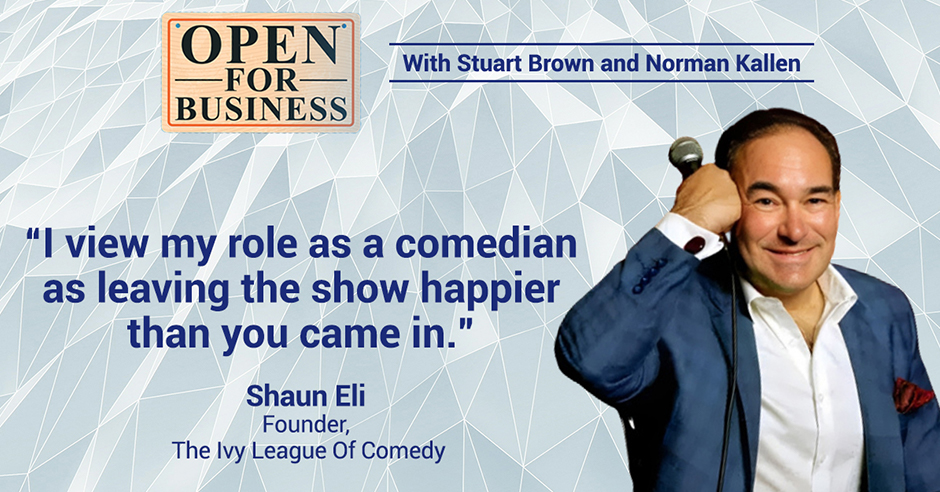
We are the most important people in the world, clearly. The world doesn’t need doctors or law enforcement officers or teachers. We just need comedians. I hope people realize I’m being sarcastic. It helps. Laughter is good for you. I view my role as a comedian as leaving the show happier than you came in.
I think that’s a great philosophy.
Comedy Philosophy and Business
Whatever it takes, you get to laugh, I think is fine no matter how low the bar is. If that’s all it takes, good for you. Having too high a bar takes to fun out of life a little bit. Real quickly too is you’re known for having cleaned what’s called observational humor. Tell us about your philosophy on what’s a funny joke and what is a good topic of conversation when you want to be funny?
I wouldn’t say it’s all observational humor because I’m getting more into storytelling. Here’s the creepy part of this interview. When I started out, I took a comedy class 22 years ago and I started out and the instructor played some comedy clips and we’d analyzed them and a big thing was Bill Cosby. I liked the fact that a lot of his routine was about his family. I was like, “I wish I had funny stories about my family. I want to be more like Bill Cosby.” Now I have funny stories. It’s not all one-liner stuff like when I started and thank God, I’m nothing like Bill Cosby.
Clean was as much a business decision as anything else because I can write dirty jokes, but you lose a lot of potential shows when you’re not a clean comic. Most of my colleagues haven’t figured that out. It’s easy to get laughs when you talk about sex, but if you don’t have a lot of jokes about sex, you have a lot of jokes about more mundane things. You can do corporate events, you can work in theaters, you can do shows for houses of worship and fundraising shows and all of that. Unless you’re famous, it pays better than a comedy club.
That’s a good lead in to their next question, which is what’s the difference between performing at a comedy club and a corporate event?
It’s weird because as I’m telling you this, literally a half hour ago, I got a text from a comedy club booking me for four shows. I don’t shy away from comedy clubs, I just don’t chase them. There are a few differences. One is a corporate event is almost always a solo show. You have no opening act and you may be going on stage after they’ve been sitting, listening to people drone on at a conference for hours and hours.
Half of them are like, “Enough of this crap. I just want to go to the bar and have a drink.” That’s if they’re away from home. If they’re home, they’re like, “I have a family to get to,” or, “Law and Order starts in a half hour. Why am I listening to this guy?” Sometimes, corporate events are great and they certainly pay better, but you’ve got to be clean. Also, in general, not too self-deprecating because you’re better off making fun of McDonald’s than making fun of yourself at a corporate event.
When you say clean, define that. Does that mean you’re not dropping F-bombs or is it just not sex jokes? What does clean mean to you?
Everybody has a different definition and sometimes people say TV clean, but if you think about it, you can go on late-night TV and as long as you don’t use one of a half a dozen or a dozen dirty words, you can be pretty filthy on late-night TV. I don’t know what clean means, but I would certainly say no dirty words and there aren’t that many of them anymore. To me, you avoid 3 or 4 dirty words maybe and avoid graphic content and avoid offensive stuff. If you’re talking about having sex with a nun, you can be really disgusting without using any disgusting terminology. People probably don’t want to hear it at a corporate event.
You never know what people are going to be offended by.
What about political stuff?
When I started out, I wanted to be a political comedian because I grew up in a political household where I’m the youngest of three and my brothers are much older. A typical dinner table conversation might have been about a political humor columnist in the New York Times, like Art Buckwald or Russell Baker. I thought, “That’s a cool job,” because my family looked up to that thing. When I started in comedy, I realized again, another terrible business decision because you’re going to piss off at least a third of the audience.
Used to be people would be like, “He’s making fun of what I believe in, but he’s funny,” and now people don’t want to hear it. It’s the same with some topics. The topic offends people. You could talk about racism without being racist. You could be making fun of racism, but as soon as you introduce the concept of race, some people will get uptight and don’t want to hear it. With politics, it’s the same thing. You start out doing political material and it’s going to really annoy you. There are a couple of exceptions to that.
When you’re preparing for a performance, what are some of the go-to safe topics that you consider universally accepted?
You never know. I can give you an example. I was doing a showcase at a comedy club and I was there with a colleague and a lot of his act is about his mother and his mother is, to use clean words, bat crap crazy. You hear the story, you want to go strangle his mother. His childhood was that bad. His mother was awful.
Somebody in the audience came up to me afterwards and was showcase where we were trying to get hired. She said, “I would never hire that comedian.” I said, “Why not?” She said, “I can’t believe the way he talked about his mother.” I could think is, “Did you hear what he said? His mother’s nuts.” Somebody else wanted to strangle his mother. This woman was obviously a mother and did not like the idea of a son making fun of his mother. You never know what people are going to be offended by.
What’s a widely misunderstood aspect of being a professional comedian?
There’s a couple. It’s weird because we want to present the illusion that we’re making it up while we’re on stage. That’s the way it’s supposed to look. There are some people that think we make up everything when we’re on stage, which is great that they believe it. Other people think everything is so scripted that if we’re interrupted by somebody in the audience, we planted that person in the audience. That’s ridiculous. Not only is it way too much trouble to go through, but I’m not sharing my meager pay with somebody else. I’m not bringing another person to shows with me.
Give us an example of when you used humor to help in a bad situation.
I can give you a few examples. I don’t know it’s humor so much, but being cheerful and maybe being funny. A friend of mine had a miscarriage and I happened to call her, it was her birthday and I think she had had the miscarriage the day before. I didn’t realize I was cheering her up. Afterwards, at the end of the phone call, we probably spent an hour on the phone and she was not so miserable. I think after a tragedy sometimes, if you’re not focusing on the tragedy, you can cheer people up.
Do you see a significant distinction between male and female comedians?
I see that they’re treated differently in business. I wouldn’t say there’s a difference except the trend in the last few years has been female comedians being deliberately dirty and talking about sex. If they’re attractive, that gets them attention and it helps make their career. I think it might be a little harder for a man to do that as far as career advancement. That said, there are a lot of disadvantages to being a female comedian.
How has your comedy evolved as you’ve deepened your understanding of the human psyche, human flourishing, especially with your advanced degree now?
I’ve gotten better at it over the years. I hope that counts for something. I don’t know that a knowledge of psychology has made me a stronger comic, but I think just paying attention to what’s going on and I think maybe I’m just better attuned to myself, so it makes it easier to write jokes. I also pay maybe a little more attention to what’s going on in the room.
The point about your degree, if people want to inject a little more humor, not say comedic humor, but humor in their lives to make themselves feel better, what would be an approach to do that? How do you do that? Can you do that without being artificial about it?
I’d say the first thing is go to a comedy show. Even just watch sitcoms or go to YouTube and watch comedians. There’s a lot you can do to be entertained.
Branding and Production
Going back, you brought up earlier about branding. How have you learned the concept? Obviously, this is your business. This is what you do for a living and you want people to know what you do because it’s money. It’s dollars in the bank, it’s your business. What lessons have you learned over the years about branding?
I’ve learned a couple of things. One is comedian says, I’d say, I’m Shaun Eli, thank you,” I get off stage and two seconds later, they’ve forgotten my name. There are two things I’ve done. One is my website. You can go to ShaunEli.com and find me. It forwards to BrainChampagne.com. People remember Brain Champagne because it’s memorable. It rhymes. I like champagne. It describes what comedy is. That’s one thing.
Two is there’s a couple of comedians. I know Al Lubel, who’s really funny, and Dom Irrera I saw when I was a kid. I remember this even though I was probably sixteen when I saw him. I remember his name because he had a bit about his name and the bit wasn’t particularly funny. When I left, I thought, “That guy was funny except for that joke about his name was stupid.”
Many years later, I remember he didn’t care if he wasn’t funny for 20 or 30 seconds, he wanted to repeat his name as much as possible so people remember it. When I tell a joke, a lot of my jokes, I will refer to myself. I’ll say something like so my girlfriend said to me, “Shaun Eli,” and I continue. I mention my name and I have a couple of jokes about my name.
Tell us about The Ivy League of Comedy. That’s your production company.
Yes. When I started out, I was a banker and I was doing amateur shows at comedy clubs and colleagues and clients people I knew through banking would come see me in a show and they’d say, “Your comedy was clean, everybody else was filthy. I want to bring people to a show, but as a corporate entertainment event, but I can’t bring them to a filthy show. Where are the clean shows?” I’m like, “I don’t know.” I looked and there weren’t really people doing clean shows. I mean there were some clean comedians around, but there weren’t deliberately clean shows.
I said, “Clearly there’s demand for this product and there’s no supply, so I’m going to start producing clean shows.” I wanted a brand name that sounded upscale. I first started out calling it Ivy League Comedy and then I was doing a show at a theater and on the marquee, they got the name wrong and they wrote The Ivy League of Comedy. When I drove up and saw that, I’m like, “That’s a better name.”
What advice would you have for a young comedian coming up now? Obviously, the world is a very different place than it was many years ago.
There are a few things. The standard advice is stage time. You’ve got to get on stage. Here’s the thing, I was on the rowing team in college and part of the training was weightlifting and part of the training was running. I noticed that the people who were good weightlifters were in the gym all the time lifting. The people who were good runners were running and they were working on their strengths and not their weaknesses. That’s stupid.
What do you hope people take away from your show, your comedy, beyond the laughs per se?
That they underpaid. I think that’s one thing. I just want people to be happier.
I want to go back to your graduate degree at Penn, your degree in happiness. The way they describe the program was really fascinating. What drew you to get a degree effectively in happiness?
Effectively, but it’s technically it’s positive psychology.
Psychology and Resilience in Comedy
With the degree that you have, did you learn anything about yourself? How did it really help you and your perspective on your life more than simply than the comedian, your profession?
I don’t know whether I mentioned this, but I think I mentioned this earlier, I thought I was stubborn. After spending $77,000 on a degree, I discovered I was resilient. I didn’t think I was that resilient a person until I started studying positive psychology and thought of all these things in my life. Woody Allen said 90% of success is showing up and I think most things in my life were luck.
I thought I was stubborn, but after spending $77,000 on a degree, I realized I’m resilient.
They were just coincidences, being in the right place at the right time. People say you make your own luck. I look at a lot of the things that have happened to me were because I didn’t quit. Resilience is a big deal, especially in sports. I was on two prestigious sports teams and both times, they cut me from the team and I just kept showing up and they’re like, “Okay.”
Resiliency is just a great human factor, need, whatever you want to call it. Just element in life.
One of the things I learned in positive psychology and Marty Seligman who’s the professor who basically invented the science. If people believe that a setback is temporary and not their fault, they’re much more likely to continue. If you think, “This is going to happen all over again, and it’s my fault, there’s nothing I can do about it,” you’re not going to succeed.
Let’s get back to the corporate setting for a moment. Where do you see humor fitting into the organizational culture to develop the culture of a business? We’ve had a number of conversations with guests about corporate culture, but we haven’t done it from a humor or a comedy perspective. Where do you see it fitting in?
I’m not really sure because I have a Business degree and I worked in finance for twenty years. I’m not quite sure what a corporate culture means, except sometimes it’s just a negative. The culture here is we work really hard and we neglect our families or we go out drinking on Thursday nights. I think humor almost always helps. What I’ve discovered and what I’ve learned is the boss maybe needs to be a little self-deprecating. If the boss is self-deprecating, people are much more comfortable.
There are some bosses where authoritarian and they don’t get the best work out of people because they’re scared, the workers are scared. If the boss is self-deprecating and can make light of a situation, that really helps. However, if the boss is making fun of the employees, that’s a negative because then they feel bullied.
In your corporate shows, do you often make fun of the senior leadership?
Almost never. Almost always, when I do a corporate event, the person hiring me says, “You should make fun of the boss. He’s going to love it.” I don’t think it works that way. There are people who go to a comedy club and sit in the front row and want to be picked on but that’s few and far between. There are many more people who don’t go to a comedy club because they got picked on or they saw somebody get picked on. I don’t do that.
I tell comedians, “Don’t pick on the audience because if you wonder why the club is half empty tonight, it’s because last night, you picked on somebody and they’re never coming back.” I don’t think the boss wants to be made fun of. Now if the boss came over and said, “Here’s something you should make fun of about me,” if I can write a joke about it that isn’t the obvious joke that employees have been telling maybe, but that almost never happens. It’s usually like the HR person who says, “You should make fun of the boss.”
What did your family think of the path you took in life as far as a profession?
My mother lived through the Depression. She came here from the Soviet Union and her attitude was, you’re Jewish, you get an education, you’d be a doctor or a lawyer or a scientist or a college professor. Literally, when I told her that I was going to be thinking about leaving banking to become a comedian, she was like, “What kind of an occupation is that for a Jew?”
She must have found it pretty funny.
I thought that was. She just was surprised. They obviously did not like the idea because the financial security isn’t there. I said, “My house is paid for. Here’s how much I need to live on. Here’s how much I’m making as a comedian now. Here’s how much more I think I could be making if I didn’t have this day job getting in the way and I could travel more and spend more time marketing.”
If you believe that a setback is temporary and not your fault, you’re much more likely to keep going. But if you think, “This is going to happen again, it’s my fault, and there’s nothing I can do about it,” you’re not going to succeed.
There is a lot of irony in what you’re saying because as I think about it, no Ivy League school or any prestigious university is cheap. That’s even more so now. When we were at Penn, I think tuition was maybe, I don’t know, $10,000 a year, plus or minus. You graduate from Penn, your parents put you through school and then you take one comedy class and you completely change gears. What did that comedy class cost you? Maybe $20, $50 at the time?
I think it was $500.
Even $500, incredible. Your ROI was terrific on that $500.
ROI in terms of dollars, yes. In terms of time, maybe not.
Do you write your own material? Getting to your business, do you have a writer? You have people who write like you did when you said, “I used to write jokes and send them to Jay Leno.” Do you have people who send you jokes to use or stories?
Very rarely. Jay Leno had to come up with ten minutes of monologue material every night. He had a staff of writers and also had some freelancers faxing in jokes. He had to feed the beast. He had to have 10 minutes of material every night and he wanted a lot more than 10 minutes to choose from. Me, I don’t have to do that. I was interviewed by a newspaper, I think it was the Asbury Park Press, a bunch of years ago and he said, “Do you remember the first joke you told on stage?” I said, “Remember it? I still use it.”
I have more material than I need for my career because I’m pretty prolific. That said, almost all comedians, unless they’re at the level of Jay Leno or Chris Rock and they’re coming out with a new special every couple of years, we write our own jokes. That said, we also help each other out. I was on tour with a comic. I gave him a couple of jokes that fit his act that didn’t fit mine and a couple of punchlines that were working better or to add on. It’s called the tag when you have another joke on the same topic. I gave him a couple of tags for his jokes.
Anyway, Shaun, thank you so much. We really appreciate your time. We really appreciate your humor. We wish you well. Good luck in your travels and your humor and your jokes, and hopefully, we will be listening to you soon.
Pleasure meeting you, Shaun.
Laughter isn’t just entertainment, it’s truly a psychological superpower. If you’ve enjoyed this episode, be sure to check out Shaun’s upcoming shows and explore more of his work, including The Ivy League of Comedy.
Remember happiness, please subscribe, share the show and leave us a review, a positive review, by the way. We’re not accepting negative reviews at this time.
Great idea. Stuart, a pleasure working with you. This was an enjoyable interview. Thank you.
Always a pleasure, Norman. Take care.
Important Links
About Shaun Eli
 Stand-up comedian Shaun Eli has rightfully been called one of America’s smartest comics. Whether it’s a story about dining with a vegetarian or successfully fighting a parking ticket in criminal court, master storyteller Shaun Eli shows you that there’s hilarity in the ordinary if you approach life with a comedic warp. Job interviews? How about the Ten Commandments? For just about anything he’s experienced he has hilarious stories at the ready. With a sense of humor that’s both cheerful and universal Shaun has headlined shows on six continents. He tours with Armed Forces Entertainment, where he has performed in such war-torn hell-holes as Curacao and The Bahamas. He starred in “The Ivy League of Comedy Live from the Emelin Theatre” on Amazon and in seasons 1 & 2 of QuickLaffs on Netflix. He also appeared on the Wendy Williams Show where she both praised and bashed him for being a comedian. In 2021 Shaun was the recipient of a major profile in The New York Times.
His jokes have been quoted everywhere from the New York Post to Readers Digest to Healthcare Finance News. In both Reform Judaism magazine and the Christian Science Monitor, where he was the subject of the cover story. He’s been featured on CareerBuilder.com and CNN, in local papers like the Scarsdale Inquirer and the Asbury Park Press and in the college papers the Yale Daily News and the Daily Pennsylvanian. Even in The Journal of Irreproducible Results, a scientific humor magazine. Yes, there is one. And his group The Ivy League of Comedysm was the subject of a front-page story in the Philadelphia Inquirer.
More than just smart, funny and clever, Shaun is determined to express his opinion passionately, not surprising for someone who wrote his first satirical essay at age ten. When profiled in Fortune magazine, “Tonight Show” host Jay Leno quoted one of Shaun’s jokes, citing it as an example of the type of “smart comedy” he’s happy to include in his opening monologue. Jay and other late-night hosts used Shaun’s topical material in their monologues for almost two decades.
Outside the world of comedy Shaun was a world-class athlete in two obscure sports (rowing and dragon-boat racing), worked as a lifeguard instructor and is an instrument-rated pilot. He is also an award-winning economic forecaster who once sold his car to a hitchhiker.
Shaun is a graduate of the Wharton School of the University of Pennsylvania. You can watch his videos and read some of his writings, including satirical political essays and hundreds of jokes he’s written for late-night television, on his web site BrainChampagne.com where his slogan “Brain Champagne: Clever Comedy for Smart Mindssm” rings true.
Shaun is also a gold-level (5 gallon) blood donor.